


 Deutsch
 Tiếng Việt
 日本語
日本語 한국어
한국어 ไทย
ไทย Português
 العربية
 Français
 Español
 Italiano
 Nederlands
 Svenska
 Norsk
Norsk Dansk
Dansk Polski
 Русский
 Türkçe
 Bahasa Indonesia
 Bahasa Melayu
Car Subwoofer: The Ultimate Buying & Installation Guide
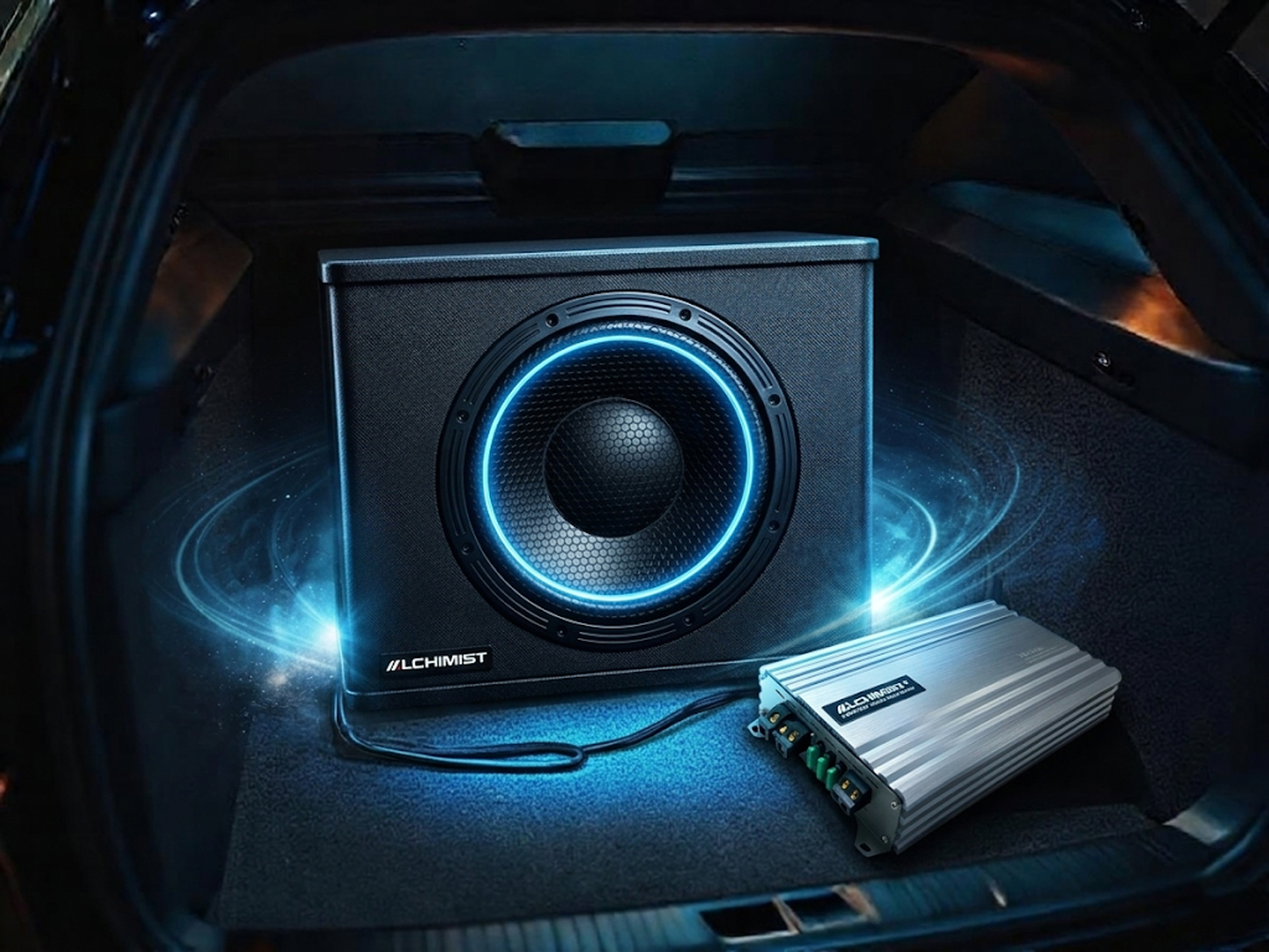
A subwoofer is the foundation of any serious car audio system. While your door speakers handle the midrange and highs, they simply cannot reproduce the deep bass frequencies that give music its weight, emotion, and physical impact. A properly installed subwoofer fills in the bottom octaves of the frequency spectrum, transforming your listening experience from thin and incomplete to full and enveloping. This guide walks you through everything you need to know to choose, install, and optimize a car subwoofer.
What Is a Car Subwoofer?
A subwoofer is a speaker specifically designed to reproduce low-frequency sound, typically from 20 Hz to 200 Hz. These frequencies include the deep bass notes in music, the rumble of movie soundtracks, and the percussive impact of kick drums and bass guitars. Subwoofers use large cone areas and long excursion (the distance the cone can move back and forth) to move enough air to produce these low frequencies at audible levels inside a vehicle.
Subwoofer Types: Sealed vs Ported vs Bandpass
The type of enclosure a subwoofer is mounted in has a dramatic impact on its sound characteristics. Each enclosure type has distinct strengths:
Sealed (Acoustic Suspension) Enclosures
A sealed enclosure is an airtight box with no ports or openings. The trapped air inside acts as a spring, providing a restoring force that keeps the cone movement controlled. Sealed enclosures produce tight, accurate, musical bass with a gentle roll-off below the tuning frequency. They are the preferred choice for audiophiles who value precision over raw output. Sealed boxes are also the most compact and forgiving of design errors, making them ideal for first-time builders.
Ported (Bass Reflex) Enclosures
A ported enclosure includes a precisely calculated vent (port) that allows air to move in and out of the box. At the tuning frequency, the port's output reinforces the cone's output, producing significantly more bass output than a sealed box of the same size. Ported enclosures deliver louder, deeper bass with more impact, but they require careful design. An incorrectly tuned port can produce boomy, one-note bass that lacks definition. Professional enclosure design software or manufacturer specifications should always be followed.
Bandpass Enclosures
A bandpass enclosure is a dual-chamber design where the subwoofer fires into a sealed rear chamber and a ported front chamber. The subwoofer's output is filtered acoustically by the enclosure, producing very high output within a narrow frequency band. Bandpass enclosures are extremely loud within their operating range but sacrifice bandwidth and transient accuracy. They are best suited for listeners who prioritize maximum bass impact over musical accuracy.
Subwoofer Sizes: Choosing the Right Diameter
Subwoofers are available in several sizes, with 10-inch and 12-inch being the most popular for car audio:
- 8-inch subwoofers: Compact and responsive. They work well in tight spaces and produce quick, punchy bass. Best for small cars or systems where trunk space is limited. They lack the deep extension and output of larger subs.
- 10-inch subwoofers: An excellent balance of output, depth, and enclosure size. A quality 10-inch sub in a properly designed enclosure can satisfy most listeners without consuming excessive trunk space. Alchimist 10-inch subwoofers are engineered for this balance, delivering deep bass with tight transient response.
- 12-inch subwoofers: The most popular size for car audio. 12-inch subs produce deeper bass extension and higher output than 10-inch models, with enclosure sizes that still fit in most vehicles. They offer the best combination of depth, output, and musicality for the majority of installations.
- 15-inch and larger: These massive subs produce earth-shaking bass output but require large enclosures and significant amplifier power. They are typically used in competition vehicles or trucks where space and power are not constraints.
Power Matching: Amplifier and Subwoofer Compatibility
Matching your amplifier to your subwoofer is critical for performance and reliability. Follow these guidelines:
RMS Power
Always match based on RMS (continuous) power, not peak power. Peak ratings are marketing numbers that represent momentary bursts the speaker can survive, not the power level it can handle continuously. Your amplifier's RMS output should be within 75% to 125% of the subwoofer's RMS rating at the correct impedance.
Impedance Matching
Subwoofers come in single voice coil (SVC) and dual voice coil (DVC) configurations. DVC subs offer wiring flexibility, allowing you to wire the coils in series (higher impedance, less power) or parallel (lower impedance, more power). Ensure your amplifier is stable at the final impedance presented by your subwoofer wiring configuration.
Common Wiring Configurations
- Single 4-ohm DVC sub: Coils in parallel = 2 ohms; coils in series = 8 ohms
- Single 2-ohm DVC sub: Coils in parallel = 1 ohm; coils in series = 4 ohms
- Two 4-ohm SVC subs: In parallel = 2 ohms; in series = 8 ohms
Enclosure Design Fundamentals
The enclosure is as important as the subwoofer itself. A poorly designed box will make even the best subwoofer sound terrible. Key design parameters include:
- Internal volume: Every subwoofer has a recommended enclosure volume specified by the manufacturer. Building the box to this specification ensures the sub operates within its designed parameters. Too small a box results in thin, strained bass. Too large a box produces loose, uncontrolled output.
- Material: Use 18 mm (3/4 inch) MDF (medium-density fiberboard) for the enclosure walls. MDF is dense, acoustically inert, and easy to work with. Avoid plywood (resonant) and particleboard (weak and prone to splitting).
- Bracing: Large panels vibrate and absorb energy that should be going to the listening area. Add internal bracing between opposite panels to stiffen the structure. A well-braced enclosure sounds noticeably tighter and more controlled.
- Sealing: For sealed enclosures, every joint must be airtight. Use wood glue on all joints and seal interior seams with silicone caulk. Even small air leaks reduce output and cause audible turbulence noise.
Installation Best Practices
Proper installation maximizes the performance of your subwoofer system:
Placement and Orientation
In most vehicles, the subwoofer enclosure sits in the trunk. The orientation of the subwoofer (firing forward, rearward, or upward) affects the sound. Rearward-firing subs in a trunk use the rear seat and trunk lid as a reflecting surface, often producing slightly louder but less defined bass. Forward-firing subs tend to sound tighter. Experiment with orientation to find what works best in your specific vehicle.
Wiring
Use appropriately sized power wire for your amplifier. A 500-watt amplifier needs at least 8 AWG power wire. A 1,000-watt amplifier requires 4 AWG or larger. Run signal cables (RCA) on the opposite side of the vehicle from power cables to avoid interference noise. Use proper fusing at the battery connection to protect against short circuits.
Gain Setting
The gain control on your amplifier is not a volume knob. It matches the amplifier's input sensitivity to the output level of your head unit or DSP processor. Setting the gain too high introduces distortion that can damage your subwoofer. Use a multimeter or oscilloscope to set the gain correctly at the amplifier's rated output.
Subsonic Filter
For ported enclosures, always enable the subsonic (infrasonic) filter on your amplifier or DSP. Below the port tuning frequency, the subwoofer cone becomes unloaded and can overextend, risking damage. A subsonic filter set 5 to 10 Hz below the port tuning frequency protects the sub from this dangerous condition while having no audible impact on the music.
Integrating the Subwoofer with Your System
A subwoofer should blend seamlessly with your main speakers, not overpower them. Achieving this requires proper system integration:
- Crossover frequency: Set the low-pass filter on your subwoofer channel to match the high-pass filter on your midbass speakers. For most systems, crossing at 60 to 80 Hz with 24 dB/octave slopes provides a smooth transition. Use a DSP with active crossovers for precise control.
- Phase alignment: At the crossover frequency, the subwoofer and midbass speakers must be in phase. Use the phase control on your amplifier or DSP to ensure constructive addition at the crossover point. Incorrect phase creates a dip in response around the crossover frequency.
- Level matching: Adjust the subwoofer level so the bass reinforces the music without calling attention to itself. A properly integrated sub makes the entire system sound fuller and more natural. If you can identify the subwoofer as a separate sound source, it is likely too loud or the crossover needs adjustment.
- Sound deadening: Applying sound deadening material to the trunk area reduces resonances and rattles caused by subwoofer output, resulting in cleaner, tighter bass throughout the cabin.
A quality subwoofer completes your car audio system by delivering the low-frequency foundation that speakers alone cannot provide. Whether you prefer tight, musical bass for jazz and classical or thunderous impact for electronic and hip-hop, the right subwoofer and enclosure combination will bring your music to life. Explore the Alchimist subwoofer lineup to find the perfect match for your listening preferences and vehicle.