


 Deutsch
 Tiếng Việt
 日本語
日本語 한국어
한국어 ไทย
ไทย Português
 العربية
 Français
 Español
 Italiano
 Nederlands
 Svenska
 Norsk
Norsk Dansk
Dansk Polski
 Русский
 Türkçe
 Bahasa Indonesia
 Bahasa Melayu
Car Speakers: The Complete Guide to Automotive Audio
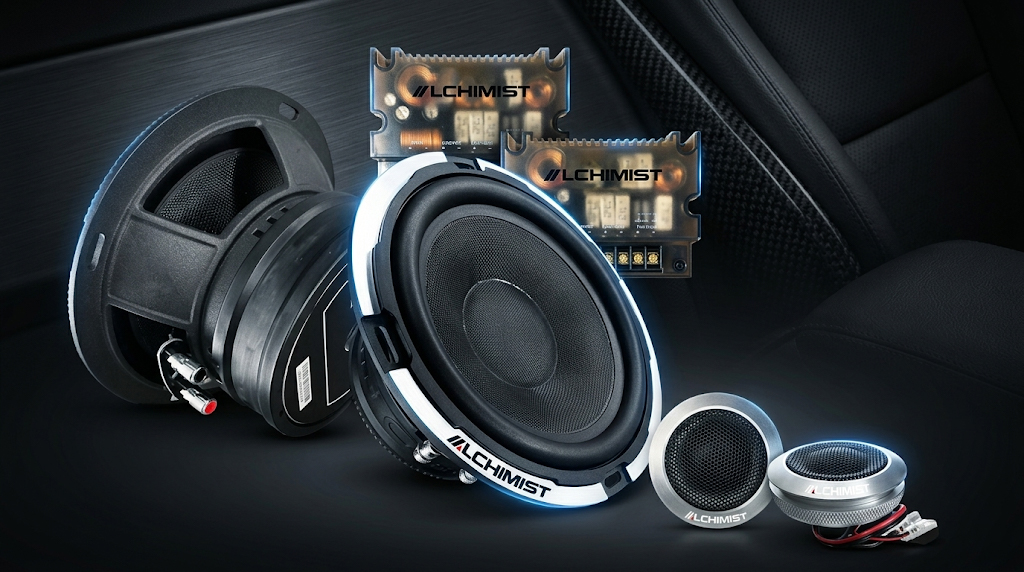
Upgrading your car speakers is one of the most rewarding investments you can make in your vehicle's audio system. Factory speakers are typically built to a price point rather than a performance standard, using lightweight paper cones and minimal magnet structures. Replacing them with quality aftermarket speakers transforms your daily commute into an immersive listening experience. This guide covers everything you need to know about choosing, understanding, and installing car speakers.
Component vs Coaxial: Understanding Speaker Types
The first decision when upgrading is choosing between component speakers and coaxial (full-range) speakers. Each has distinct advantages depending on your goals and budget.
Coaxial Speakers
Coaxial speakers combine a woofer, tweeter, and sometimes a super tweeter into a single unit. The tweeter is mounted on a post directly in front of the woofer cone. This makes installation straightforward since you only need one mounting location per speaker. Coaxial speakers are ideal for rear fill positions or for listeners who want a significant upgrade over factory speakers without complex installation.
Component Speakers
Component speaker systems separate the woofer, tweeter, and crossover into individual pieces. This separation allows each driver to be mounted in the optimal location: tweeters at ear level on the A-pillar or dash, and woofers in the door panels. The result is dramatically better sound staging and imaging. For serious audio enthusiasts, component systems are the preferred choice. Alchimist component speakers are engineered with this philosophy, delivering precise frequency separation and natural tonal balance.
Key Specifications Explained
Understanding speaker specifications helps you make informed purchasing decisions. Here are the numbers that matter most:
Frequency Response
Frequency response indicates the range of sound a speaker can reproduce, measured in Hertz (Hz). A typical car midrange speaker covers 60 Hz to 20,000 Hz. Look for speakers with a wide, flat frequency response rather than simply the broadest range. A speaker that reproduces 80 Hz to 18,000 Hz evenly will sound better than one that claims 40 Hz to 25,000 Hz but has dramatic peaks and dips.
Sensitivity
Sensitivity measures how efficiently a speaker converts power into sound, expressed in decibels (dB) at one watt from one meter. Higher sensitivity means louder output for the same input power. Speakers rated at 88 dB or higher are considered efficient. If you are running speakers from a head unit without a separate amplifier, high-sensitivity speakers (90 dB and above) are essential for adequate volume.
Power Handling
Power handling is specified as RMS (continuous) and peak watts. Always focus on the RMS rating, which represents the continuous power the speaker can handle without damage. Match your amplifier's output to the speaker's RMS rating for optimal performance. Underpowering speakers can actually cause more damage than modest overpowering, as a clipping amplifier sends distorted signals that overheat voice coils.
Impedance
Most car speakers are rated at 4 ohms. Some specialty speakers run at 2 ohms for higher power draw or 8 ohms for specific applications. Ensure your amplifier is compatible with the impedance of your chosen speakers for safe, efficient operation.
Speaker Cone Materials and Their Impact on Sound
The material used for the speaker cone directly affects how the speaker sounds. Each material has unique properties:
- Polypropylene: The most common material in quality car speakers. Polypropylene cones are lightweight, moisture-resistant, and produce a warm, natural sound. Many Alchimist midrange speakers use treated polypropylene for its excellent balance of rigidity and damping.
- Woven Fiber (Kevlar, Aramid): These materials offer exceptional stiffness-to-weight ratios, resulting in precise, detailed midrange reproduction. They excel at handling transients and complex musical passages without cone breakup.
- Aluminum and Titanium: Metal cones are extremely rigid and lightweight, producing bright, detailed sound. However, they can exhibit metallic resonance at high frequencies, so quality engineering of the surround and suspension is critical to control breakup modes.
- Paper (Treated): Modern treated paper cones offer excellent natural sound characteristics with good internal damping. They produce a warm, organic tone that many audiophiles prefer, especially for vocal reproduction.
Tweeter Materials
Tweeter domes are typically made from:
- Silk Dome: Smooth, warm high-frequency reproduction with natural roll-off. Silk dome tweeters are forgiving of source material imperfections and produce non-fatiguing highs suitable for long listening sessions.
- Aluminum Dome: Crisp, extended highs with excellent detail retrieval. Aluminum tweeters can sound bright if not properly equalized, but they reveal micro-details in recordings that softer materials may miss.
- Beryllium: The ultimate tweeter material, offering an unmatched combination of low mass and extreme rigidity. Beryllium tweeters reproduce the highest frequencies with effortless clarity but come at a premium price point.
How to Choose the Right Speakers for Your Vehicle
Selecting speakers involves matching your listening preferences, budget, and installation capabilities. Follow these guidelines:
- Define your priorities: Do you value deep bass extension, vocal clarity, or sparkling highs? Different speaker designs emphasize different parts of the frequency spectrum.
- Consider your amplification: If running speakers from a head unit, choose high-sensitivity models. If you have or plan to add an amplifier, you can select lower-sensitivity speakers that may offer better sound quality at higher power levels.
- Measure your mounting depth: Door panels have limited depth. Measure the available space behind your speaker grille before purchasing to ensure the speaker physically fits without contacting the window mechanism or door skin.
- Plan for the future: If you intend to add a DSP processor later, component speakers will benefit more from time alignment and active crossover tuning than coaxial speakers.
- Budget wisely: Allocate more budget to the front speakers since they handle the primary soundstage. Rear speakers serve as fill and can be less expensive.
Installation Tips for Maximum Performance
Even the best speakers will underperform if installed poorly. Here are essential installation practices:
Door Treatment
Car doors are not designed as speaker enclosures. They are thin, resonant, and full of holes that allow sound to leak and cancel. Applying sound deadening material to the outer door skin creates a more sealed environment, dramatically improving bass response and reducing rattles. This single step often makes a bigger difference than the speaker upgrade itself.
Secure Mounting
Use speaker adapter rings (baffles) made from MDF or high-density plastic to create a solid, flat mounting surface. Never mount speakers directly to thin sheet metal without reinforcement. A rigid mount ensures the speaker's energy goes into moving air rather than flexing the mounting surface.
Wiring
Replace thin factory speaker wire with 14 or 16 gauge oxygen-free copper wire. Ensure all connections are soldered and heat-shrink wrapped for reliability and low resistance. Poor connections cause signal loss and intermittent sound issues.
Tweeter Positioning
For component systems, mount tweeters at ear level, angled toward the listening position. The A-pillar is the most popular location, offering excellent sound staging. Dash corners and sail panels (the triangular panel where the door meets the dashboard) are also effective mounting locations.
Getting the Most from Your Speaker Upgrade
After installing new speakers, consider these steps to maximize your investment:
- Break-in period: New speakers need 20 to 40 hours of moderate-volume play before the suspension loosens and the speaker reaches its designed performance. Do not judge the sound during the first few hours.
- Amplification: Adding a dedicated amplifier gives your speakers clean, abundant power. This reduces distortion and allows the speakers to reproduce dynamics faithfully.
- Digital processing: A DSP processor allows you to tune the system to your car's specific acoustics, correcting phase issues, adjusting crossover points, and aligning arrival times for a coherent soundstage.
- Sound deadening: Treating doors, floors, and the trunk with sound deadening materials lowers the noise floor and improves speaker performance across all frequencies.
Quality speakers are the foundation of any great car audio system. Whether you choose component speakers for maximum fidelity or coaxial speakers for simplicity, upgrading from factory equipment is a decision you will not regret. Explore the Alchimist speaker lineup to find the perfect match for your vehicle and listening preferences.