


 Deutsch
 Tiếng Việt
 日本語
日本語 한국어
한국어 ไทย
ไทย Português
 العربية
 Français
 Español
 Italiano
 Nederlands
 Svenska
 Norsk
Norsk Dansk
Dansk Polski
 Русский
 Türkçe
 Bahasa Indonesia
 Bahasa Melayu
What is a Car DSP and Why Your Vehicle Needs One
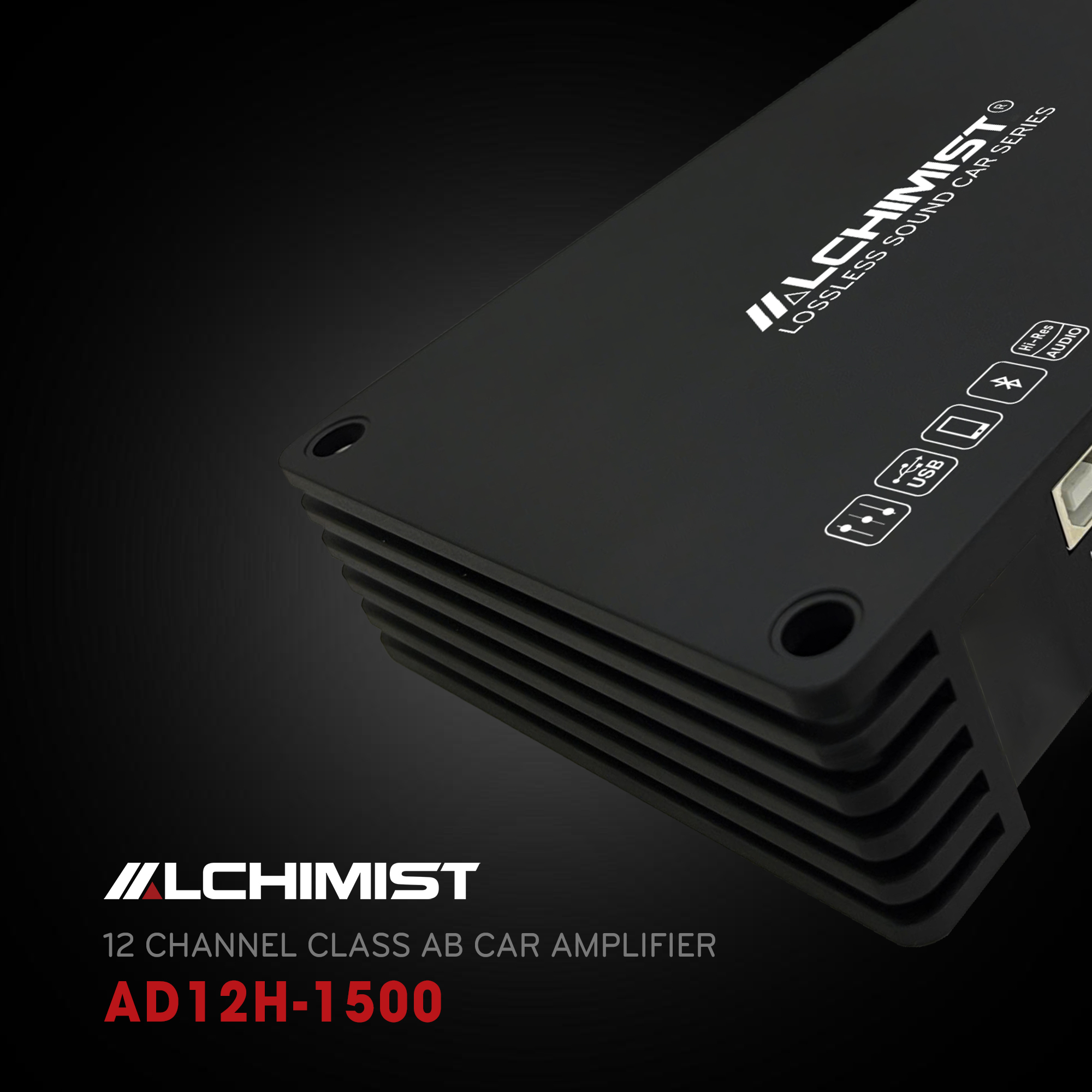
If you have ever sat in a car and felt that the music sounded flat, muddy, or simply wrong despite having decent speakers, you are not alone. The interior of a vehicle is one of the most challenging acoustic environments imaginable. Reflective glass, absorptive seats, asymmetric listening positions, and road noise all conspire against clean sound reproduction. A Car Digital Signal Processor (DSP) is the single most transformative upgrade you can make to overcome these obstacles and unlock the true potential of your audio system.
What Exactly Is a Car DSP and How Does It Work?
A car DSP is a specialized microcomputer that sits between your head unit and your amplifiers or powered speakers. Its sole purpose is to manipulate the audio signal in the digital domain before it reaches your speakers. Unlike a simple equalizer that only adjusts volume at certain frequencies, a DSP provides a comprehensive suite of tools including parametric equalization, time alignment, crossover management, and phase correction.
At its core, the DSP receives an audio signal, either analog or digital, converts it into a stream of numerical data, applies mathematical algorithms to reshape that data, and then outputs a corrected signal. All of this happens in real time with imperceptible latency. Modern processors like the Alchimist AD12H-1500 use high-performance chipsets capable of processing millions of calculations per second, ensuring that every nuance of your music is preserved while the acoustic problems of your cabin are corrected.
Why Does a Car Cabin Sound So Bad Without Processing?
Understanding why a DSP is necessary starts with understanding why cars sound poor in the first place. There are several key challenges that a DSP addresses:
- Asymmetric Listening Position: You sit off-center relative to the speakers. Sound from the left arrives at your ears before sound from the right, creating a lopsided stereo image. Without time alignment, the soundstage collapses toward the nearest speaker.
- Reflective and Absorptive Surfaces: Glass windows reflect high frequencies, while fabric seats and carpeting absorb mid and low frequencies. This creates dramatic peaks and dips in the frequency response that no speaker can compensate for on its own.
- Road and Wind Noise: Constant background noise masks quiet details in your music, especially in the lower midrange and bass regions. A DSP can help by reshaping the tonal balance to compensate for the masking effect.
- Speaker Placement Constraints: Door-mounted midrange drivers, dash-mounted tweeters, and rear-deck speakers are positioned for convenience, not acoustics. A DSP realigns the output from each driver so they work together cohesively.
- Factory Head Unit Limitations: Many modern vehicles have factory head units with built-in equalization curves that alter the signal before it reaches your aftermarket gear. A quality DSP with high-level inputs can detect and flatten these curves.
What Are the Core Features of a Quality Car DSP?
Not all DSPs are created equal. When evaluating a processor, these are the features that separate a serious unit from a toy:
Parametric Equalization
A parametric EQ gives you control over the center frequency, bandwidth (Q factor), and gain of each band. Quality units provide 31 bands of parametric EQ per channel, giving you surgical precision to flatten your in-car response curve. The Alchimist AD10H-700, for example, offers 31-channel professional audio adjustment across all output channels.
Time Alignment (Digital Delay)
Time alignment is arguably the most important feature of a car DSP. By adding precise digital delays to individual channels, the DSP ensures that sound from every speaker arrives at the listening position simultaneously. This creates a focused, holographic soundstage that appears to emanate from the center of the dashboard rather than from individual speaker locations.
Active Crossover Networks
Instead of relying on passive crossovers that waste power as heat, a DSP provides fully configurable digital crossovers. You can set the crossover frequency, slope steepness (typically from 6 dB/octave up to 48 dB/octave), and filter type (Butterworth, Linkwitz-Riley, or Bessel) for each output channel independently.
Input Signal Processing
Advanced DSPs accept both low-level (RCA) and high-level (speaker-level) inputs, making them compatible with factory and aftermarket head units alike. Some units, such as the Alchimist AD10K-800, even feature optical and Bluetooth inputs for maximum flexibility, along with unique entertainment features like wireless karaoke microphone support.
How Does a DSP Transform Your Listening Experience?
The difference between a system with and without proper DSP tuning is not subtle. Here is what you can expect after installing and tuning a quality processor:
- Precise Stereo Imaging: Vocalists appear centered on the dashboard. Instruments spread across a wide, defined soundstage. You can close your eyes and point to where each element of a recording exists in space.
- Flat Frequency Response: The peaks and valleys caused by your cabin acoustics are corrected. Bass is tight and controlled rather than boomy. Midrange vocals are clear and present. High frequencies are detailed without being harsh.
- Seamless Driver Integration: Tweeters, midranges, midbass drivers, and subwoofers blend together as a single coherent source. There are no audible gaps or overlaps between frequency ranges.
- Dynamic Range Preservation: A good DSP maintains the full dynamic range of your recordings. Quiet passages remain detailed, and loud passages hit with impact without distortion.
Who Should Consider Adding a DSP to Their Vehicle?
A DSP is not exclusively for competition-level audiophiles. Any of the following scenarios justify the investment:
- You have upgraded your speakers or amplifiers but are not satisfied with the overall sound quality.
- You want to keep your factory head unit (for steering wheel controls, vehicle integration, or warranty purposes) but want aftermarket sound quality.
- You are building a multi-amplifier system and need precise crossover management.
- You spend significant time driving and want your vehicle to be a genuinely enjoyable listening environment.
- You are an installer or audio professional who tunes vehicles for clients and needs repeatable, measurable results.
What Should You Look for When Shopping for a Car DSP?
When selecting a DSP, consider the channel count relative to your system design. A 10-channel DSP like the Alchimist AD10H-700 handles most two-way front, rear fill, and subwoofer configurations comfortably. If you are running a three-way front stage with center channel and subwoofer, a 12-channel unit like the Alchimist AD12H-1500 provides the additional outputs you need.
Also consider the tuning software. The best hardware in the world is useless if the software interface is clunky or unintuitive. Alchimist provides dedicated tuning applications for both PC and Android, making it straightforward to connect, measure, and tune your system whether you are in the shop or in the field.
Is a DSP Worth the Investment for Your Car Audio System?
The short answer is yes. A DSP delivers a greater improvement in perceived sound quality per dollar spent than almost any other upgrade. You can spend thousands on premium speakers and amplifiers, but without signal processing to correct the acoustic nightmare of a car interior, you will never hear what that equipment is truly capable of.
Think of it this way: speakers and amplifiers are the instruments, but the DSP is the conductor. It ensures every component plays in harmony, at the right time, at the right level, and in the right frequency range. Whether you are building your first aftermarket system or fine-tuning a competition-grade installation, a quality DSP is the foundation upon which great car audio is built.
Explore the full range of Alchimist DSP processors to find the right unit for your system and take the first step toward audio that truly moves you.