


 Deutsch
 Tiếng Việt
 日本語
日本語 한국어
한국어 ไทย
ไทย Português
 العربية
 Français
 Español
 Italiano
 Nederlands
 Svenska
 Norsk
Norsk Dansk
Dansk Polski
 Русский
 Türkçe
 Bahasa Indonesia
 Bahasa Melayu
High-Resolution Audio in Your Car: The Ultimate Guide to HD Music
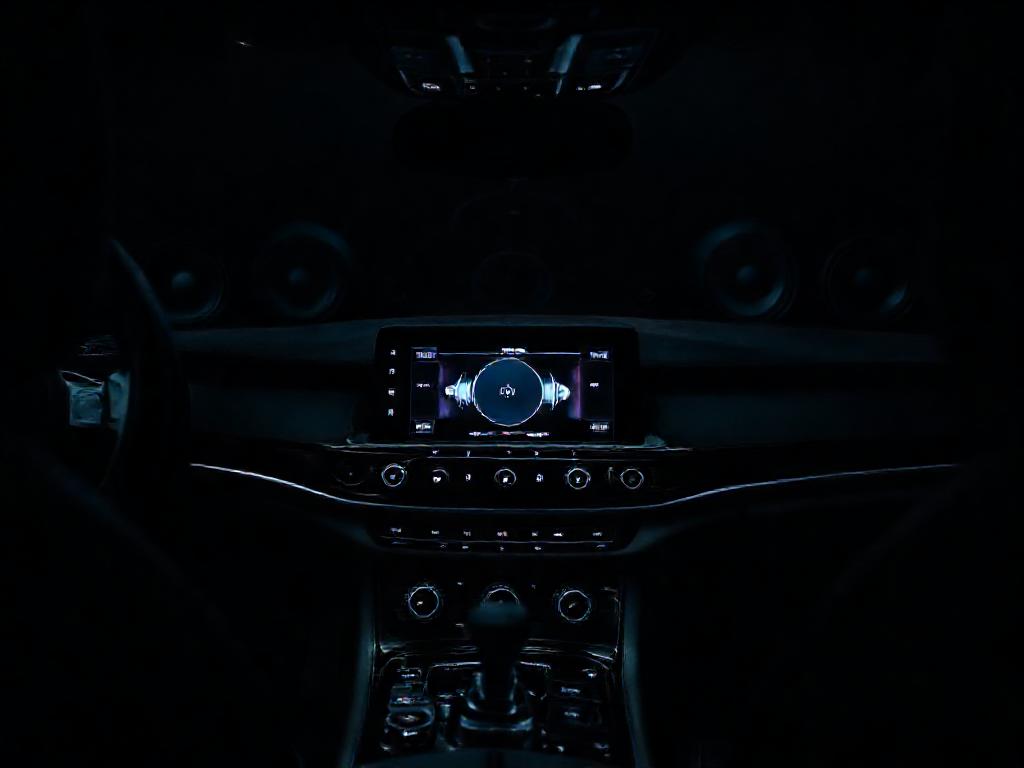
If you're a music lover, high resolution audio car systems can revolutionize your driving experience. Unlike standard audio setups, high-resolution audio (HRA) delivers studio-quality sound with greater detail, dynamic range, and clarity. Whether you're upgrading your factory system or building a custom setup, optimizing for high resolution audio car performance requires the right components, file formats, and tuning techniques.
Understanding High-Resolution Audio in Cars
High-resolution audio in your car represents the pinnacle of mobile listening experiences. Unlike standard compressed formats like MP3, high-resolution audio (often called Hi-Res or HD audio) preserves the full dynamic range and detail of original recordings. This technology captures frequencies and nuances that standard formats simply discard during compression.
When we talk about high resolution audio car systems, we're referring to setups capable of reproducing these superior formats with accuracy. The difference becomes immediately apparent when comparing a 320kbps MP3 to a 24-bit/96kHz FLAC file - the latter contains approximately 6.5 times more data, resulting in richer textures and more lifelike sound.
Modern vehicles increasingly support high-resolution playback, but achieving true HD audio requires more than just a capable head unit. The entire signal chain - from source to speakers - must be optimized to handle the increased data and frequency range. This is where digital signal processing (DSP) becomes essential.
Why High-Resolution Audio Matters in Vehicles
The car environment presents unique challenges for audio reproduction. Road noise, cabin acoustics, and speaker placement all affect sound quality. High-resolution audio helps overcome these obstacles by providing:
- Greater dynamic range for better clarity at all volume levels
- Extended frequency response beyond standard CD quality (20Hz-20kHz)
- More precise imaging and soundstage reproduction
- Reduced compression artifacts that become noticeable in noisy environments
Studies show that listeners can perceive improvements in spatial cues and instrument separation when using high resolution audio car systems. This is particularly valuable in vehicles where the listening position is fixed and soundstage optimization is critical. The increased bit depth (24-bit vs 16-bit) also provides more headroom, reducing distortion during loud passages.
For audiophiles and music enthusiasts, the car often becomes the primary listening environment. Commutes, road trips, and daily drives represent significant portions of our listening time. Investing in high-resolution audio ensures you're not missing any musical details during these hours.
Essential Components for High-Resolution Car Audio
Building a true high-resolution audio system requires several key components working in harmony. Each element must be capable of handling the increased data and frequency demands of HD audio formats.
Source Units and Media Players
Your source unit serves as the foundation for high-resolution playback. Modern options include:
- Aftermarket head units with high-quality DACs (Digital-to-Analog Converters)
- Portable media players with large storage for HD files
- Smartphone interfaces with high-resolution audio support
- In-dash systems with lossless Bluetooth codecs (aptX Adaptive, LDAC)
Look for units that support at least 24-bit/96kHz playback, though 24-bit/192kHz is becoming more common. Some premium systems now offer DSD (Direct Stream Digital) support, which uses a completely different encoding method for even higher fidelity.
Digital Signal Processors (DSP)
A quality DSP is crucial for optimizing high resolution audio car systems. These processors allow precise tuning of:
- Time alignment for perfect imaging
- Equalization to compensate for cabin acoustics
- Crossover settings for optimal speaker performance
- Volume leveling and dynamic range control
Modern DSPs can handle the increased data rates of high-resolution audio while applying sophisticated algorithms to enhance the listening experience. Some advanced units even include room correction capabilities adapted for vehicle interiors.
Amplifiers and Speakers
Your amplification and speaker system must be capable of reproducing the extended frequency range of high-resolution audio. Consider:
- Multi-channel amplifiers with sufficient power reserves
- Component speakers with extended frequency response
- Subwoofers capable of reproducing deep bass without distortion
- High-quality wiring and connections to preserve signal integrity
Remember that high-resolution audio reveals flaws in your system that might be masked by compressed formats. Every component in the signal chain must be of sufficient quality to benefit from HD audio sources.
Optimizing Your System with DSP for High-Resolution Audio
Digital Signal Processing transforms good car audio systems into exceptional ones, especially when dealing with high-resolution sources. The right DSP settings can compensate for the acoustic challenges of vehicle interiors while taking full advantage of HD audio's capabilities.
Time Alignment and Soundstage Optimization
One of the most powerful DSP features is time alignment. In a car, sound from different speakers reaches your ears at different times due to varying distances. DSP can digitally delay signals to create a cohesive soundstage where all frequencies arrive simultaneously.
For high resolution audio car systems, precise time alignment is crucial because:
- It preserves the spatial cues encoded in high-resolution recordings
- It creates a more natural listening experience with proper instrument placement
- It compensates for the off-center listening position typical in vehicles
Most quality DSPs offer measurement tools to determine the exact delay needed for each speaker based on its distance from the listener. Some advanced systems even account for the speed of sound variations due to temperature and humidity.
Equalization for Cabin Acoustics
Vehicle interiors present unique acoustic challenges that DSP can address through sophisticated equalization. Common issues include:
- Boominess in the bass frequencies due to small cabin size
- Midrange peaks caused by dashboard and windshield reflections
- Treble roll-off from absorption by seat materials
A parametric equalizer in your DSP allows precise adjustments to these problem frequencies. For high-resolution audio, subtle EQ changes make a significant difference because the format reveals more detail in the frequency spectrum. Many modern DSPs include automatic EQ features that analyze your system's response and suggest corrections.
Crossover Settings for Speaker Protection
Proper crossover settings ensure each speaker operates within its optimal frequency range. This is particularly important for high-resolution audio because:
- HD audio contains more extended high and low frequencies
- Speakers can be damaged by frequencies outside their designed range
- Proper crossovers prevent phase cancellation between drivers
Most DSPs offer both high-pass and low-pass filters with adjustable slopes (typically 6-24dB/octave). For component speaker systems, a 12 or 18dB/octave slope often provides the best balance between protection and smooth frequency transitions.
High-Resolution Audio File Formats Explained
Not all high-resolution audio formats are created equal. Understanding the differences helps you choose the best sources for your high resolution audio car system. Here are the most common formats you'll encounter:
Lossless Compressed Formats
- FLAC (Free Lossless Audio Codec): The most popular lossless format, offering excellent compression (typically 30-50% of original size) without quality loss. Supports up to 32-bit/384kHz.
- ALAC (Apple Lossless Audio Codec): Apple's equivalent to FLAC, with similar quality and compression. Native support in iOS devices makes it convenient for iPhone users.
- WMA Lossless: Microsoft's lossless format, less common but still supported by some car audio systems.
Uncompressed Formats
- WAV: The standard uncompressed PCM format, identical to CD audio but capable of higher resolutions. Large file sizes limit practical use in cars.
- AIFF: Apple's equivalent to WAV, with identical quality characteristics. Often used in professional audio production.
High-Efficiency Formats
- MQA (Master Quality Authenticated): A unique format that folds high-resolution audio into smaller files. Requires compatible hardware for full unfolding but offers excellent quality in a compact size.
- DSD (Direct Stream Digital): Uses a completely different encoding method than PCM formats. Offers exceptional quality but requires specialized DACs and large file sizes.
When selecting formats for your car audio system, consider both quality and practicality. FLAC and ALAC offer the best balance for most users, while MQA provides an excellent option for those with limited storage space.
Practical Tips for Getting the Most from High-Resolution Car Audio
Now that you understand the components and formats, here are actionable tips to maximize your high resolution audio car experience:
Source Material Matters
- Purchase music from high-resolution download stores like HDtracks, Qobuz, or Tidal Masters
- Rip your CDs to lossless formats (FLAC or ALAC) for the best quality
- Avoid transcoding between formats, as this degrades quality
- Check streaming services for high-resolution options (Tidal, Qobuz, Amazon Music HD)
System Setup and Tuning
- Use a calibrated microphone for accurate DSP measurements
- Start with flat EQ settings and make subtle adjustments
- Verify all connections are secure and use high-quality cables
- Consider professional installation for complex systems
Maintenance and Optimization
- Regularly update your DSP firmware for the latest features
- Clean your media files and remove duplicates to save space
- Check for software updates for your head unit or media player
- Periodically re-measure your system as components age
Remember that high-resolution audio reveals both the best and worst aspects of your system. Take the time to properly set up and tune each component for optimal performance.
Choosing the Right Equipment for High-Resolution Car Audio
Selecting the right components for your high resolution audio car system depends on your budget, vehicle, and listening preferences. While entry-level systems can benefit from high-resolution sources, premium setups truly shine with HD audio.
For those seeking the ultimate in-car listening experience, consider the entire signal chain. Start with a quality source unit capable of playing high-resolution files, then add a sophisticated DSP for precise tuning. Amplification should provide clean power with sufficient headroom, and speakers must be capable of reproducing the extended frequency range.
Brands like Alchimist offer comprehensive solutions for discerning audiophiles. Their premium car audio components, developed since 1943 in Waiblingen, Germany, are engineered to handle the demands of high-resolution audio while maintaining the durability required for automotive environments. Whether you're looking for advanced DSP processors or high-end amplifiers, Alchimist's product line provides options for building a true high-resolution audio system in your vehicle.
Ultimately, the best system is one that's properly matched to your vehicle and listening preferences. Take the time to audition different components and consider professional installation for complex setups. With the right equipment and proper tuning, your car can become the ultimate high-resolution listening environment.
Ready to upgrade? Explore our premium high-resolution audio car systems or learn more about audio file formats for your car.