


 Deutsch
 Tiếng Việt
 日本語
日本語 한국어
한국어 ไทย
ไทย Português
 العربية
 Français
 Español
 Italiano
 Nederlands
 Svenska
 Norsk
Norsk Dansk
Dansk Polski
 Русский
 Türkçe
 Bahasa Indonesia
 Bahasa Melayu
Understanding Speaker Impedance and Power Handling
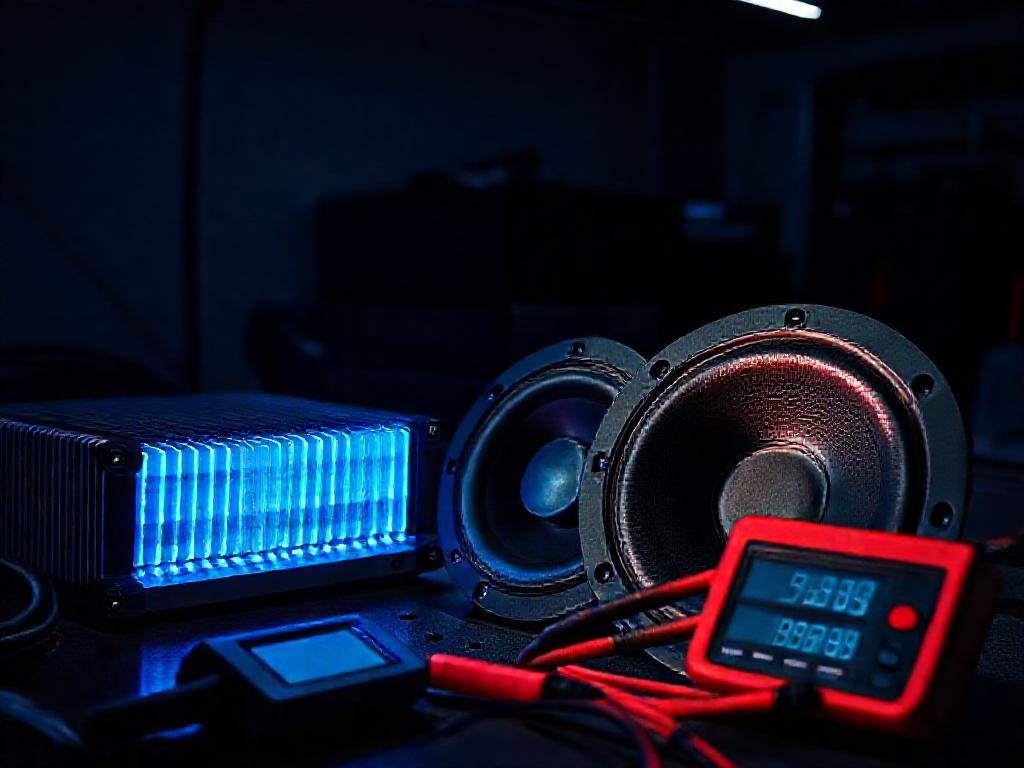
Speaker impedance and power handling are two of the most frequently misunderstood specifications in car audio. Many enthusiasts focus exclusively on wattage numbers printed on the box, but without understanding what those numbers actually mean and how impedance affects the entire equation, you risk damaging equipment or never achieving the performance your gear is capable of delivering.
This guide explains both concepts in practical terms, walks through common scenarios, and shows you how to make informed decisions when matching speakers to amplifiers.
What Is Speaker Impedance and Why Does It Matter?
Impedance is the total opposition a speaker presents to the flow of electrical current from an amplifier. It is measured in ohms and represented by the symbol omega. Unlike simple resistance, which remains constant, impedance varies with frequency. When a speaker is rated at 4 ohms, that number represents its nominal impedance, essentially an average value across its operating frequency range.
In car audio, the most common impedance ratings are 2 ohms and 4 ohms. Home audio speakers typically run at 8 ohms, but car audio systems operate at lower voltages from a 12-volt electrical system, so lower impedance allows amplifiers to deliver more power without requiring extremely high voltage swings.
How Impedance Affects Amplifier Output
The relationship between impedance and power output is inversely proportional. When you connect a lower-impedance speaker to an amplifier, the amplifier delivers more current and thus more power. For example, an amplifier rated at 50 watts into 4 ohms might produce approximately 75 to 100 watts into 2 ohms, assuming it is designed to operate at that impedance.
This is critical to understand because connecting speakers with impedance lower than the amplifier's minimum rated load can cause overheating, distortion, or permanent damage to the amplifier's output stage. Always check your amplifier's specifications for its minimum stable impedance before making connections.
Nominal vs. Minimum Impedance
A speaker rated at 4 ohms nominal may dip to 3 ohms or lower at certain frequencies, particularly near its resonant frequency. This minimum impedance point is important because it represents the greatest demand the speaker will place on your amplifier. Quality speaker manufacturers publish impedance curves in their technical documentation, and it is worth reviewing these when planning your system.
What Do RMS and Peak Power Ratings Really Mean?
Power handling specifications tell you how much electrical power a speaker can accept without damage, but there are two very different measurements you need to understand.
RMS Power (Continuous Power Handling)
RMS stands for root mean square, and it represents the continuous power a speaker can handle over an extended period without thermal or mechanical failure. This is the most important power rating and the one you should base all your system-matching decisions on.
When the Alchimist AS-G65C component system is rated for a certain RMS power handling, that number indicates the continuous power level the drivers can sustain during normal music playback. It accounts for voice coil heating, suspension fatigue, and other real-world stress factors.
Peak Power (Maximum Power Handling)
Peak power represents the maximum instantaneous power a speaker can handle for very brief moments, such as a sharp transient hit on a snare drum or a bass note attack. Peak power ratings are typically two to four times the RMS rating.
Be cautious with peak power numbers. Some manufacturers use inflated peak ratings as a marketing tool. A speaker advertised as "500 watts" might only handle 125 watts RMS continuously. Always compare RMS to RMS when evaluating speakers.
How Do You Properly Match Speakers to an Amplifier?
Proper speaker-to-amplifier matching is about balancing power delivery with the speaker's thermal and mechanical limits. Here are the guidelines that professional installers follow.
The Ideal Power Ratio
For optimal performance and longevity, your amplifier's RMS output per channel should be between 75 percent and 150 percent of the speaker's RMS power handling, measured at the same impedance.
- Amplifier power equals speaker RMS: A perfect match. The speaker receives its full rated power, and you have headroom before clipping.
- Amplifier power is slightly above speaker RMS (up to 150 percent): This is actually ideal for many setups. The extra headroom means the amplifier works comfortably without clipping, and you are unlikely to send full power continuously during music playback.
- Amplifier power is below speaker RMS (down to 75 percent): Perfectly safe. The speaker will not reach its maximum output, but you avoid the risk of amplifier clipping, which is one of the primary causes of speaker damage.
The Danger of Under-Powering Speakers
Many people assume that using a small amplifier with large speakers is safe because the power is low. This is a dangerous misconception. When an underpowered amplifier is driven to its limits, it clips the audio signal, producing distorted square waves. These clipped signals contain far more energy than clean signals of the same volume, and they deliver that energy as heat directly to the voice coil. Clipping is the number one cause of tweeter failure in car audio systems.
A clean, adequately powered signal is always safer than a distorted, underpowered one.
How Does Wire Gauge Affect Power Delivery?
Speaker wire introduces resistance into the circuit between the amplifier and the speaker. If the wire gauge is too thin or the run is too long, a meaningful portion of the amplifier's power is lost as heat in the wire rather than reaching the speaker.
For most car audio installations, 16-gauge speaker wire is sufficient for runs under three meters at moderate power levels. For high-power subwoofer applications or longer runs, 14-gauge or 12-gauge wire reduces resistive losses and ensures the amplifier sees the correct impedance load.
Recommended Wire Gauges
- Tweeters and small mid-range drivers: 18 to 16 gauge
- Mid-bass drivers (6.5-inch): 16 to 14 gauge
- Subwoofers: 14 to 12 gauge
- Runs exceeding 5 meters: Step up one gauge from the recommendations above
What Happens When You Wire Speakers in Series or Parallel?
When you connect multiple speakers to a single amplifier channel, the wiring configuration changes the total impedance the amplifier sees.
Parallel Wiring
Connecting two speakers in parallel reduces the total impedance. Two 4-ohm speakers in parallel present a 2-ohm load. Two 2-ohm speakers in parallel present a 1-ohm load. This increases the current draw from the amplifier and produces more power output, but you must ensure the amplifier is stable at the resulting impedance.
Series Wiring
Connecting two speakers in series adds their impedances together. Two 4-ohm speakers in series present an 8-ohm load. This reduces the power output from the amplifier but provides a safer, more conservative load. Series wiring is less common in car audio but can be useful when you need to raise the impedance to match an amplifier's optimal operating range.
Series-Parallel Combinations
For subwoofer systems with multiple drivers, series-parallel wiring allows you to achieve a specific target impedance. For example, four 4-ohm subwoofers can be wired in a series-parallel configuration to present a 4-ohm total load, making the system compatible with virtually any amplifier.
How Do Impedance and Power Handling Apply to Subwoofers?
Subwoofers like the Alchimist AS-801 often present unique considerations because they handle the highest power levels in the system and operate at frequencies where large cone excursions generate significant back-EMF that affects impedance.
Many car audio subwoofers are available in dual voice coil configurations. A dual voice coil subwoofer has two separate wire coils wound around the former, each with its own impedance rating. This allows flexible wiring options. A dual 4-ohm voice coil subwoofer can be wired to present either a 2-ohm load (parallel) or an 8-ohm load (series) to the amplifier.
When selecting a subwoofer amplifier, determine the final impedance based on your wiring plan and match the amplifier's output at that impedance to the subwoofer's RMS power handling using the guidelines described above.
What Role Does the Enclosure Play in Power Handling?
A subwoofer's enclosure directly affects its power handling capability. A properly designed sealed or ported enclosure controls cone excursion and provides acoustic loading that helps the driver manage the energy it receives. An improperly sized enclosure, one that is too large, for instance, allows excessive cone movement that can exceed the driver's mechanical limits even at power levels below its rated capacity.
Always follow the manufacturer's recommended enclosure specifications. These are calculated based on the driver's Thiele-Small parameters and represent the conditions under which the power handling rating was tested.
Practical Tips for Getting It Right
- Always match at RMS, not peak. Ignore peak power numbers when designing your system. Use RMS figures from both the speaker and amplifier specifications.
- Check impedance compatibility first. Before shopping for speakers, know your amplifier's minimum stable impedance and its power output at common impedance values.
- Use a DSP to protect your investment. A digital signal processor allows you to set precise crossover points and output limiters that prevent speakers from receiving frequencies or power levels they cannot handle.
- Set your gains correctly. Amplifier gain is not a volume control. Set it to match your source unit's output voltage to the amplifier's input sensitivity. Incorrect gain settings are a common cause of clipping and speaker damage.
- Listen for distortion. If you hear harshness, buzzing, or a loss of clarity at higher volumes, reduce the volume immediately. These are warning signs that something in the signal chain is being pushed beyond its limits.
Summary: Building a Properly Matched System
Understanding impedance and power handling removes the guesswork from car audio system design. When you match components correctly, every element in your system operates within its comfort zone, delivering maximum performance and long-term reliability.
Start with quality speakers that publish honest specifications, like the Alchimist speaker range, match them to an amplifier with appropriate power output at the correct impedance, use proper wiring, and let a DSP handle the fine-tuning. This methodical approach will produce results that far exceed what random component selection can achieve.