


 Deutsch
 Tiếng Việt
 日本語
日本語 한국어
한국어 ไทย
ไทย Português
 العربية
 Français
 Español
 Italiano
 Nederlands
 Svenska
 Norsk
Norsk Dansk
Dansk Polski
 Русский
 Türkçe
 Bahasa Indonesia
 Bahasa Melayu
Best Speaker Positions for Optimal Soundstage
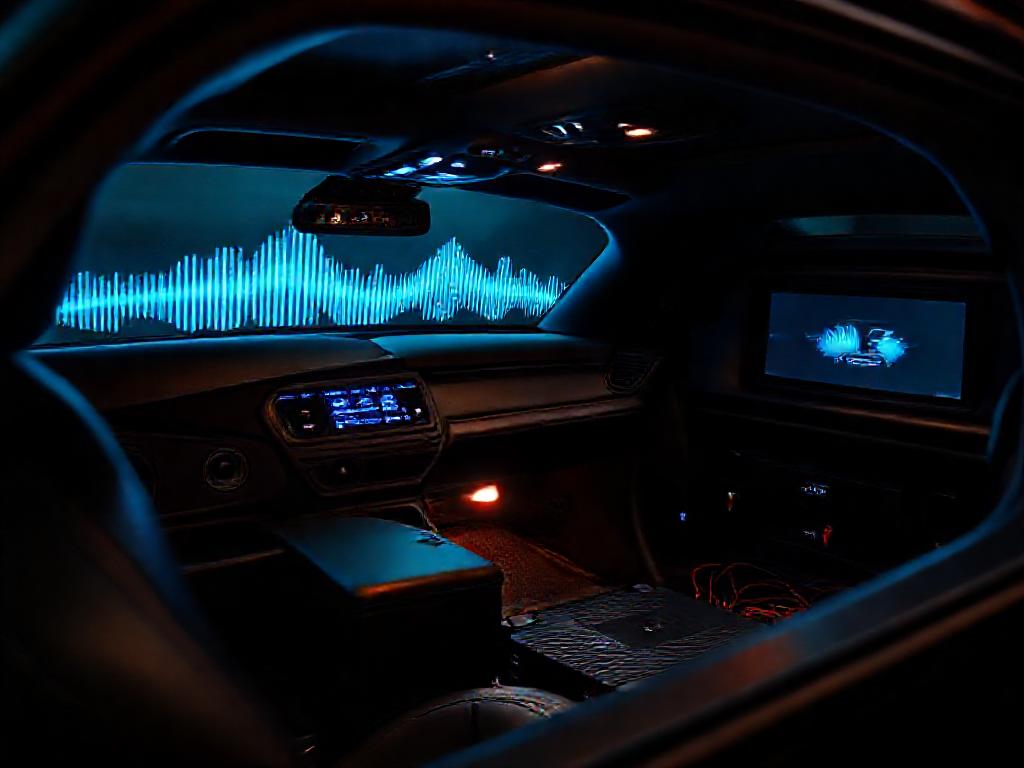
In car audio, speaker positioning is arguably more important than the speakers themselves. You can install the finest drivers and the most powerful amplifier, but if the speakers are mounted in poor locations, the sound will never reach its potential. Proper placement determines imaging, soundstage width, depth, and the overall sense of realism that separates a good system from a truly great one.
This guide covers optimal mounting locations for every type of driver in a car audio system, explains the acoustic principles behind these choices, and offers practical solutions for common vehicle constraints.
What Is Soundstage and Why Does Speaker Position Determine It?
Soundstage refers to the perceived spatial presentation of music. In a well-tuned system, instruments and vocals appear to occupy specific locations in a three-dimensional space in front of you, much like sitting in the front row of a concert. Imaging is the precision with which individual sound sources are positioned within that soundstage.
Your brain determines where sounds come from by analyzing timing and level differences between your left and right ears. In a car, the listener is not centered between the speakers, the cabin is filled with reflective surfaces, and the speakers are often at awkward angles and distances. Thoughtful speaker positioning is the first step toward compensating for these challenges.
Where Should You Mount Tweeters for the Best Imaging?
Tweeter placement has the single greatest impact on imaging quality. Because tweeters reproduce the highest frequencies, which are highly directional, their physical position and angle relative to your ears determine the perceived width and focus of the soundstage.
Dashboard Surface Mounting
Mounting tweeters on top of the dashboard, near the base of the windshield, is a popular and effective approach. This places the tweeter high and forward, allowing high frequencies to arrive at your ears with minimal obstruction. Angling the tweeters slightly toward the center of the cabin, rather than pointing them directly at the nearest listener, helps create a wider, more cohesive soundstage across the front seats.
Many vehicles have factory tweeter locations on the dashboard or in the sail panels (the triangular area where the A-pillar meets the dashboard). These positions work well because they are already at the correct height.
A-Pillar Mounting
For the most precise imaging, A-pillar mounting is the gold standard in competition and audiophile car audio. By fabricating custom tweeter pods on the A-pillars, you gain exact control over the tweeter's position, angle, and aim. This is the approach used by virtually every winning vehicle in EMMA and IASCA competitions.
When mounting tweeters on the A-pillar, the ideal position is typically at about two-thirds of the way up from the dashboard, angled slightly down and toward the opposite-side listener. This creates equal path lengths for both channels and maximizes the perceived width of the soundstage. We cover A-pillar mounting techniques in detail in our A-pillar mounting guide.
Kick Panel Mounting
Some advanced installations mount tweeters in the kick panels, near the driver's and passenger's feet. While this may seem counterintuitive, it can work exceptionally well when the tweeters are aimed correctly. The advantage is a more even path length between left and right channels from the driver's position. The disadvantage is that it requires significant custom fabrication and careful time-alignment to integrate with the mid-bass drivers.
Positions to Avoid
Avoid mounting tweeters deep inside door panels or behind grilles with dense mesh. High frequencies are easily blocked by obstacles, and every layer of material between the tweeter and your ear reduces clarity and alters the response. Also avoid mounting tweeters at vastly different heights on each side, as this creates asymmetrical imaging that is difficult to correct even with DSP processing.
Where Is the Best Location for Mid-Bass Drivers?
Mid-bass drivers, typically 6.5-inch to 8-inch woofers in component systems, handle the critical range from about 80 Hz to 3,000 Hz. This range includes the body of most instruments and the fundamental frequencies of the human voice.
Front Door Mounting
The front door is the most common and practical location for mid-bass drivers. Nearly every vehicle has a 6.5-inch or 6x9-inch speaker location in the front door panel. When upgrading, you can usually install aftermarket speakers like the Alchimist AS-G65C woofer into the factory location with the right adapter ring.
For best results with door-mounted mid-bass drivers:
- Apply sound deadening material to the outer door skin and surrounding sheet metal. This reduces resonance and converts the door into a more effective sealed or semi-sealed enclosure.
- Use a solid mounting baffle. A sturdy MDF or composite ring ensures the speaker is rigidly coupled to the door structure, reducing energy loss and improving bass response.
- Seal behind the speaker. Prevent sound from the rear wave of the speaker from cancelling the front wave by sealing any large openings behind the mounting location.
Kick Panel Mounting
Custom kick-panel enclosures move the mid-bass drivers from the doors to the lower footwell area. This approach offers several acoustic advantages. The speakers fire more directly at the listener, path-length differences between left and right channels are reduced, and you can build a proper sealed enclosure that optimizes the driver's low-frequency response.
Kick-panel installations are popular in competition cars and in vehicles where the door panels are too thin or too resonant to support a powerful mid-bass driver. The trade-off is significant fabrication work and reduced footwell space.
Under-Seat and Floor Mounting
Some vehicles, particularly trucks and sports cars with limited door depth, benefit from under-seat or floor-mounted mid-bass drivers. This is a less common approach and typically requires custom enclosures, but it can work well when combined with proper time alignment from a DSP processor.
Where Should Rear Speakers Be Positioned?
The role of rear speakers in a high-quality car audio system is a topic of ongoing debate among audio enthusiasts. In competition and audiophile systems, rear speakers are often omitted entirely because the front stage, when properly tuned, provides all the imaging and soundstage you need.
However, for daily listening, rear speakers can add a sense of envelopment and ambience that many listeners find enjoyable. If you include rear speakers, keep these principles in mind:
- Use coaxial speakers for simplicity. The Alchimist AS-G65 coaxial speaker is an excellent rear-fill choice, providing smooth, balanced output without the complexity of a component installation.
- Keep rear speaker volume subtle. Rear speakers should add ambience, not compete with the front stage. A good starting point is to set rear levels 6 to 10 dB below the front speakers.
- Apply a time delay. Using your DSP, delay the rear speakers slightly so their output arrives at the listener's ears just after the front stage, reinforcing the sense of space without pulling the image backward.
- Rear deck versus door. Rear deck locations tend to produce a more diffuse, ambient sound. Rear door locations provide a more direct output. For rear-fill purposes, the rear deck is often preferred.
What Is the Ideal Subwoofer Location for a Balanced Low End?
Subwoofers reproduce frequencies below approximately 80 Hz. At these wavelengths, sound is essentially non-directional, meaning your brain cannot easily tell where the bass is coming from. This gives you flexibility in subwoofer placement, but it does not mean all locations sound the same.
Trunk-Mounted Enclosures
The most common subwoofer location is in the trunk, mounted in a sealed or ported enclosure. A subwoofer like the Alchimist AS-801 performs exceptionally well in a trunk-mounted sealed enclosure, delivering tight, accurate bass that integrates smoothly with the front stage speakers.
Trunk mounting works best when the subwoofer fires toward the rear seat. The interaction between the subwoofer's output and the cabin acoustics produces the strongest bass response when the sub faces the passenger compartment rather than the trunk lid.
Under-Seat Subwoofers
Compact shallow-mount subwoofers can be mounted under the front or rear seats. This saves trunk space and places the subwoofer closer to the listener, which can improve the sense of integration between bass and mid-range. The limitation is enclosure volume: under-seat installations typically require very shallow, compact enclosures that limit maximum output.
Infinite Baffle Installations
In an infinite baffle setup, the subwoofer is mounted directly to the rear deck or a dividing panel between the trunk and passenger compartment with no enclosure. The trunk itself acts as the rear volume. This approach can produce remarkably natural bass with excellent transient response, but it requires a subwoofer with the right Thiele-Small parameters and a well-sealed trunk.
How Does Time Alignment Compensate for Speaker Position?
In a car, you are always closer to one set of speakers than the other. Sound from the nearest speaker arrives at your ears before the corresponding sound from the far speaker. This timing difference destroys imaging because your brain interprets the earlier-arriving sound as louder and closer.
Digital time alignment, available in DSP processors, adds a precise delay to the nearest speakers so that all drivers appear to be the same distance from the listener. This is one of the most transformative tools in car audio, and it works best when the speakers are already in good physical positions. Time alignment can correct timing errors, but it cannot fix poor tweeter angles or heavily obstructed drivers.
Practical Steps for Optimizing Your Speaker Layout
- Start with the tweeters. Audition different positions before committing to a permanent installation. Many installers use temporary mounts or adhesive putty to test tweeter locations on the dash, A-pillars, and sail panels.
- Aim for symmetry. Try to make the left and right speaker positions as symmetrical as possible. Equal mounting heights, angles, and distances simplify DSP tuning and produce more consistent results.
- Treat the doors. Even the best mid-bass driver will underperform in a rattling, resonant door. Sound deadening is not optional for serious audio; it is a prerequisite.
- Measure and tune. After installation, use a measurement microphone and RTA software to analyze the frequency response from the listening position. Adjust crossover points, levels, and time alignment based on measured data rather than guesswork.
- Listen critically. Play well-recorded tracks that you know intimately. Focus on vocal placement, instrument separation, and the sense of depth. Small adjustments to tweeter angle or level can make dramatic differences in the final result.
Speaker positioning is both a science and an art. The principles outlined here will put you on the right track, but every vehicle and every listener is different. Take the time to experiment, measure, and refine your installation, and you will be rewarded with a soundstage that transforms your daily drive into a private concert hall. Browse the Alchimist speaker range to find the right drivers for your next build.