


 Deutsch
 Tiếng Việt
 日本語
日本語 한국어
한국어 ไทย
ไทย Português
 العربية
 Français
 Español
 Italiano
 Nederlands
 Svenska
 Norsk
Norsk Dansk
Dansk Polski
 Русский
 Türkçe
 Bahasa Indonesia
 Bahasa Melayu
Component vs Coaxial Speakers: A Complete Comparison
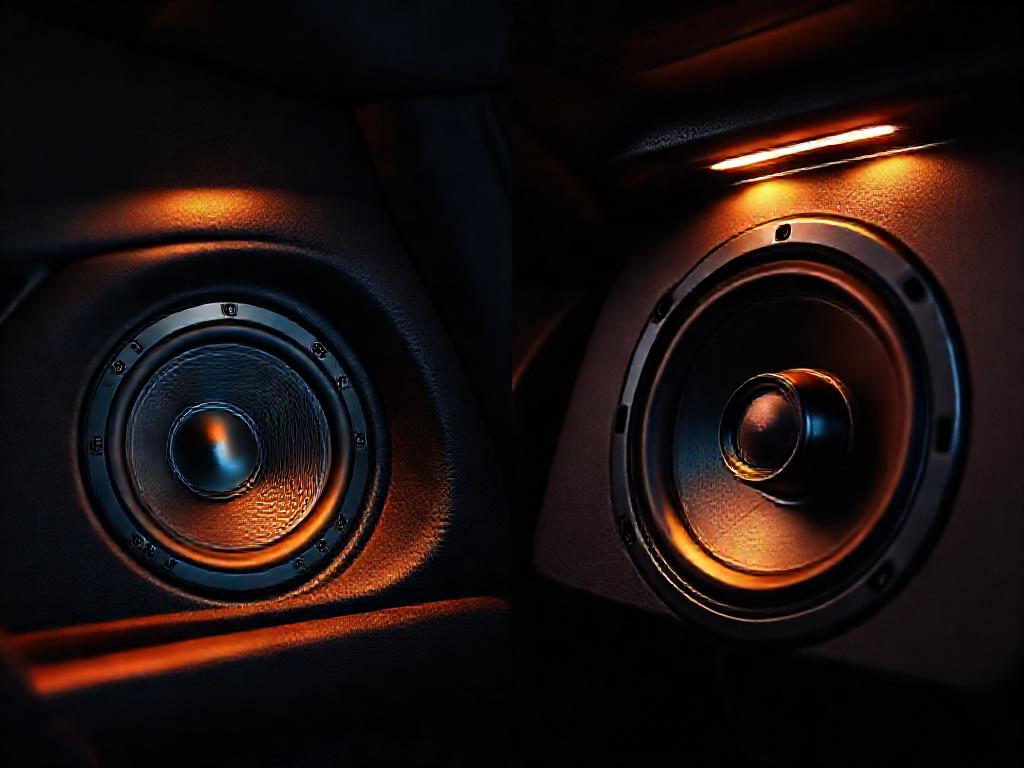
Choosing the right speakers is one of the most impactful decisions you will make when building or upgrading a car audio system. The debate between component and coaxial speakers has been central to the car audio community for decades, and for good reason. Each design takes a fundamentally different approach to reproducing music, and understanding those differences will help you invest your money where it matters most.
In this guide, we break down the key differences between component and coaxial speakers, explain the advantages and trade-offs of each, and help you decide which type suits your listening goals and budget.
What Are Coaxial Speakers and How Do They Work?
Coaxial speakers, sometimes called full-range speakers, combine multiple driver elements into a single assembly. A typical coaxial speaker mounts a tweeter directly on top of the woofer cone, aligning both drivers on the same axis. This means mid-range frequencies and high frequencies radiate from roughly the same point in space.
Most factory car audio systems use coaxial speakers because they are simple to manufacture and easy to install. They drop into existing speaker locations without any additional wiring or mounting hardware. A two-way coaxial features a woofer and a tweeter, while a three-way coaxial adds a super-tweeter or a small mid-range driver for additional frequency coverage.
Advantages of Coaxial Speakers
- Easy installation: Coaxial speakers are designed to fit standard mounting locations. In most vehicles, upgrading from a factory speaker to an aftermarket coaxial is a straightforward swap.
- Lower cost: Because everything is integrated into one unit, coaxial speakers are generally more affordable than equivalent-quality component sets.
- Built-in crossover: The crossover network is typically mounted on the speaker basket itself, eliminating the need for external crossover components.
- Space efficient: With no separate tweeter pods or external crossovers to mount, coaxial speakers require minimal installation space.
Limitations of Coaxial Speakers
- Fixed tweeter position: Because the tweeter is mounted on the woofer, its position is determined by the woofer location, usually low in the door. This can result in high frequencies arriving at your ears from below, which is not ideal for imaging.
- Simpler crossover design: The integrated crossover on a coaxial speaker is typically a basic capacitor or first-order network. This provides less precise frequency separation compared to a dedicated external crossover.
- Limited tuning flexibility: You cannot independently adjust tweeter level or crossover slope without external processing equipment.
What Makes Component Speakers Different?
A component speaker system separates the drivers into individual units: a dedicated woofer, a dedicated tweeter, and an external passive crossover network. Each driver is designed and optimized for its specific frequency range, and because they are separate, you have complete freedom in choosing where to mount each one.
This separation is the single biggest advantage of component speakers. By mounting the tweeter higher in the vehicle, at dash level or on the A-pillar, you can create a more natural and realistic soundstage. The music appears to come from in front of you rather than from down at your feet.
The Alchimist AS-G65C is a prime example of a well-engineered component system. It pairs a 6.5-inch mid-bass driver with a separate silk-dome tweeter and a precision-tuned crossover network that ensures smooth frequency transitions. This kind of design allows serious listeners to achieve studio-like clarity in the car environment.
Advantages of Component Speakers
- Superior imaging and soundstage: Separate tweeter mounting means high frequencies reach your ears from the correct position, creating a wide, realistic soundstage.
- Better crossover networks: External passive crossovers provide steeper filter slopes and more precise frequency division between drivers.
- Higher sound quality: Dedicated drivers optimized for specific frequency ranges produce cleaner, more detailed sound across the entire spectrum.
- Tuning flexibility: Many component crossovers include tweeter attenuation switches, allowing you to adjust brightness to suit your taste and vehicle acoustics.
- Upgrade path: Component systems integrate beautifully with DSP processors and external amplifiers, making them the foundation of a high-performance audio system.
Limitations of Component Speakers
- More complex installation: You need to mount tweeters separately, run additional speaker wire, and find space for the external crossover networks.
- Higher cost: Quality component sets carry a price premium over coaxial speakers of similar driver size.
- Professional installation often recommended: Getting the best performance from components may require custom tweeter pods, A-pillar modifications, or door panel adjustments.
How Does Sound Quality Compare Between the Two Types?
In a direct comparison at similar price points, component speakers will almost always outperform coaxial speakers in terms of clarity, detail, and spatial presentation. The reasons are straightforward.
First, the separated tweeter placement creates proper imaging. When high frequencies arrive at your ears from dashboard height, your brain processes the sound as coming from a stage in front of you. This is how live music and studio monitors are designed to work. Coaxial speakers with tweeters mounted low in the door panels cannot achieve this effect.
Second, the external crossover in a component set does a more thorough job of dividing the frequency spectrum. A well-designed crossover like the one in the Alchimist AS-G65C system uses higher-order filter slopes to minimize overlap between the woofer and tweeter. This reduces distortion and phase issues in the critical crossover region around 2,000 to 4,000 Hz, where the human ear is most sensitive.
Third, the individual drivers in a component set are typically built to higher specifications. Because each driver handles a narrower frequency range, it can be optimized for excursion, cone material, and suspension characteristics specific to that range.
That said, a high-quality coaxial speaker like the Alchimist AS-G65 can still deliver impressive performance, especially in rear-fill applications or in vehicles where tweeter mounting options are limited. The AS-G65 uses the same high-quality cone materials and motor structures found in the component line, ensuring excellent mid-bass punch and smooth high-frequency extension from a single mounting point.
Which Type Should You Choose for Your Vehicle?
The right choice depends on your priorities, budget, and willingness to invest in installation.
Choose coaxial speakers if:
- You want a meaningful upgrade from factory speakers without complex installation
- Your budget is limited and you prefer to allocate funds toward a DSP or amplifier
- You are upgrading rear speakers for fill and ambience rather than primary listening
- Your vehicle has limited space for separate tweeter mounting
Choose component speakers if:
- Sound quality and imaging are your top priorities
- You are building a system around a DSP processor and dedicated amplification
- You are willing to invest in proper tweeter placement, whether on the A-pillar, dash, or sail panel
- You want maximum tuning flexibility for competitions or critical listening
Can You Mix Component and Coaxial Speakers in One System?
Absolutely, and many experienced installers recommend this approach. A common and highly effective configuration uses component speakers in the front stage, where imaging and detail matter most, and coaxial speakers in the rear for subtle fill and ambience.
For example, you might install the Alchimist AS-G65C component set in the front doors with tweeters mounted on the A-pillars, paired with the Alchimist AS-G65 coaxial speakers in the rear doors. This gives you the imaging benefits of components where it counts while keeping the rear installation simple and cost-effective.
When paired with a quality DSP processor, this mixed configuration allows you to set time alignment, crossover points, and level matching independently for each driver, extracting maximum performance from both speaker types.
How Important Is Amplification for Each Speaker Type?
Both coaxial and component speakers benefit significantly from dedicated amplification, but the improvement is often more dramatic with component systems. Here is why.
Component speakers are designed to reveal detail. When powered by a clean, high-current amplifier, they can reproduce subtle nuances in recordings that a head unit alone cannot drive. The separate crossover network also functions more accurately when fed a strong, distortion-free signal.
Coaxial speakers still benefit from amplification, primarily in the form of better bass response and higher volume capability without distortion. If you are running coaxial speakers as part of a simpler system, even a modest four-channel amplifier will deliver a noticeable improvement over head unit power.
Final Verdict: Making the Right Investment
If you are serious about sound quality and willing to invest in proper installation, component speakers are the clear winner. The ability to position tweeters at ear level, combined with superior crossover design and driver optimization, creates a listening experience that coaxial speakers simply cannot match.
However, coaxial speakers remain an excellent choice for practical upgrades, rear-fill applications, and budget-conscious builds. A quality coaxial from a reputable manufacturer will still outperform factory speakers by a wide margin.
Whatever path you choose, remember that speakers are only one part of the equation. Proper amplification, sound deadening, and digital signal processing all play critical roles in the final result. Visit our products page to explore the full Alchimist speaker lineup, including both component and coaxial options engineered for serious car audio performance.