


 Deutsch
 Tiếng Việt
 日本語
日本語 한국어
한국어 ไทย
ไทย Português
 العربية
 Français
 Español
 Italiano
 Nederlands
 Svenska
 Norsk
Norsk Dansk
Dansk Polski
 Русский
 Türkçe
 Bahasa Indonesia
 Bahasa Melayu
Speaker Frequency Response Guide: How to Read the Specs Like a Pro
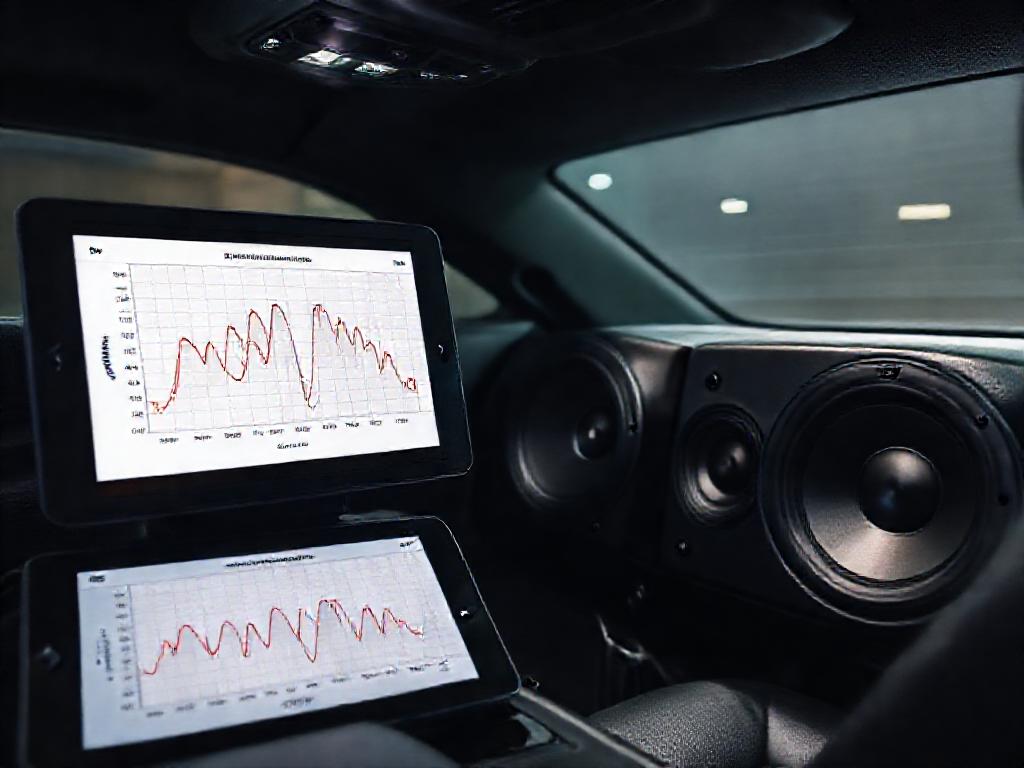
If you're shopping for car audio speakers, understanding the speaker frequency response guide is crucial. These specs reveal how well a speaker reproduces sound across different frequencies, directly impacting your listening experience. But what do those numbers and graphs really mean? Let’s break it down step by step.
Understanding Speaker Frequency Response Basics
When shopping for car audio speakers, you'll inevitably encounter the term speaker frequency response. This specification tells you the range of frequencies a speaker can reproduce, measured in Hertz (Hz) and kilohertz (kHz). But what do these numbers actually mean for your listening experience?
The human ear can typically hear sounds between 20Hz (deep bass) and 20kHz (high treble). A speaker's frequency response indicates which part of this spectrum it can handle. For example, a specification of 50Hz-20kHz suggests the speaker can reproduce sounds from 50 vibrations per second up to 20,000 vibrations per second.
However, not all frequency response specs are created equal. The numbers alone don't tell the whole story about sound quality. That's why understanding how to read these specifications correctly is crucial for making informed purchasing decisions.
Decoding Frequency Response Specifications
What the Numbers Really Mean
The frequency response specification typically appears in one of two formats: a simple range (e.g., 40Hz-22kHz) or a range with a tolerance (e.g., 35Hz-25kHz ±3dB). The latter is more informative because it includes the variation in output level across the frequency range.
When you see a specification like 40Hz-20kHz, it usually means the speaker can produce sounds within that range, but it doesn't indicate how consistently it performs. The ±3dB notation is more valuable because it shows how much the output level varies. A smaller number (like ±1dB) indicates more consistent performance across frequencies.
Common Misconceptions About Frequency Response
- Wider is always better: While a wider range might seem impressive, it doesn't guarantee better sound quality. A speaker with 30Hz-20kHz ±10dB may sound worse than one with 50Hz-18kHz ±2dB.
- The lowest number equals bass performance: The lowest frequency number indicates the speaker's capability, but room acoustics and installation quality significantly affect actual bass performance.
- All speakers perform equally within their range: In reality, speakers often have peaks and dips in their response, which can color the sound.
- Frequency response is the only spec that matters: While important, it's just one factor among many, including sensitivity, power handling, and distortion levels.
How Frequency Response Affects Sound Quality
The Role of Frequency Response in Audio Reproduction
A speaker's frequency response directly impacts how accurately it reproduces music. An ideal speaker would have a flat frequency response, meaning it produces all frequencies at the same volume level. In practice, no speaker achieves perfect flatness, but the closer it gets, the more natural the sound.
When a speaker has peaks in its response (areas where certain frequencies are louder), it can make those frequencies stand out unnaturally. Conversely, dips (areas where frequencies are quieter) can make instruments or vocals sound thin or missing. For example, a peak in the midrange might make vocals sound harsh, while a dip in the upper mids could make guitars sound distant.
Real-World Implications for Car Audio
In a car environment, frequency response becomes even more critical due to the challenging acoustic conditions. The small, irregular space creates numerous reflections and resonances that can exaggerate or mask certain frequencies. A speaker with a smooth frequency response will generally perform better in these conditions than one with wild variations.
For instance, many car audio systems struggle with bass response because the small cabin size makes it difficult to reproduce low frequencies accurately. A speaker with a well-controlled low-end response (even if it doesn't reach the lowest frequencies) will often sound better than one that claims ultra-low extension but has uneven bass performance.
How to Evaluate Frequency Response Specs Properly
What to Look for in Manufacturer Specifications
When examining speaker frequency response specs, consider these key factors:
- Tolerance values: Look for ±3dB or better. This indicates the speaker maintains relatively consistent output across its range.
- Measurement conditions: Some manufacturers measure in anechoic chambers (ideal conditions), while others use real-world environments. Anechoic measurements are more reliable for comparison.
- Frequency range: For car audio, 50Hz-20kHz is generally sufficient. Very low frequencies (below 40Hz) are difficult to reproduce well in a car.
- Response curves: Some manufacturers provide frequency response graphs. These visual representations show exactly where peaks and dips occur.
Red Flags in Frequency Response Specifications
Be wary of these common marketing tactics that can mislead consumers:
- Extremely wide ranges: Specs like 10Hz-50kHz are often unrealistic for car audio and may indicate poor measurement standards.
- Missing tolerance values: If no ±dB value is provided, the specification is essentially meaningless.
- Vague language: Terms like "extended frequency response" without specific numbers should raise questions.
- No measurement details: Reputable brands specify how and where measurements were taken.
Practical Tips for Choosing Speakers Based on Frequency Response
Matching Speakers to Your Audio System
When selecting speakers based on frequency response, consider your entire audio system. If you have a subwoofer handling low frequencies, you might prioritize midrange and tweeter performance. In this case, a speaker with excellent response from 80Hz-20kHz might be more valuable than one claiming 40Hz-22kHz.
For full-range systems without a subwoofer, look for speakers with good low-end extension (50Hz or lower) and smooth response. Remember that very low frequencies require significant power to reproduce accurately, so consider your amplifier's capabilities as well.
Listening Tests vs. Specifications
While speaker frequency response specs provide valuable information, they should never replace actual listening tests. Here's how to evaluate speakers effectively:
- Listen to familiar music: Bring tracks you know well to test how accurately the speakers reproduce them.
- Test different genres: Try music with wide frequency ranges (like orchestral pieces) and focused ranges (like acoustic guitar).
- Compare at similar volumes: Listen at moderate volumes to avoid being misled by loudness differences.
- Check for fatigue: Speakers with poor frequency response can sound harsh or tiring over time.
Installation Factors That Affect Frequency Response
Even the best speakers can sound mediocre if installed improperly. Consider these factors that influence frequency response in your vehicle:
- Mounting location: Door speakers may sound different than dash-mounted tweeters due to reflections and resonances.
- Enclosure type: Sealed enclosures generally provide flatter frequency response than ported designs.
- Crossover settings: Properly configured crossovers ensure each driver handles its optimal frequency range.
- Sound deadening: Reducing panel vibrations and road noise can reveal more accurate frequency response.
Advanced Considerations in Frequency Response
Understanding Frequency Response Graphs
Many high-end manufacturers provide frequency response graphs, which offer a visual representation of a speaker's performance. Here's how to interpret them:
- X-axis: Represents frequency (usually logarithmic scale from 20Hz to 20kHz).
- Y-axis: Shows output level in decibels (dB), typically with 0dB as the reference level.
- Flat lines: Indicate consistent output across frequencies (ideal).
- Peaks and dips: Show where the speaker boosts or attenuates certain frequencies.
- Slope: The rate at which high frequencies roll off can indicate tweeter quality.
When examining graphs, look for smooth curves with minimal peaks and dips. A graph with wild variations suggests the speaker may color the sound significantly.
Room Correction and Equalization
Modern digital signal processors (DSPs) can compensate for some frequency response irregularities. However, this approach has limitations:
- Pros: Can flatten response, reduce peaks, and boost dips within reasonable limits.
- Cons: Excessive equalization can increase distortion and reduce dynamic range.
- Best practice: Use EQ to fine-tune, not to fix fundamental speaker limitations.
For the best results, start with speakers that have inherently good frequency response and use EQ for minor adjustments. Brands like Alchimist offer high-quality components with smooth, well-measured response curves that respond well to fine-tuning.
Conclusion: Making Informed Speaker Choices
Understanding speaker frequency response is essential for selecting car audio components that deliver the sound quality you desire. While specifications provide valuable guidance, they should be considered alongside other factors like sensitivity, power handling, and real-world listening tests.
Remember that no single specification tells the whole story about a speaker's performance. A well-balanced approach that considers frequency response along with other technical specifications and practical listening experiences will lead to the best results.
For those seeking premium options, Alchimist's component speaker systems provide meticulously engineered frequency response characteristics that deliver exceptional clarity and accuracy. Their German engineering heritage ensures precise measurements and consistent performance across their product line.
Ultimately, the best speaker for your system is one that not only looks good on paper but also sounds great in your vehicle. Use this speaker frequency response guide as a starting point, but trust your ears to make the final decision.
For more tips on optimizing your car audio system, check out our premium speaker collection or read our car audio installation guide.