


 Deutsch
 Tiếng Việt
 日本語
日本語 한국어
한국어 ไทย
ไทย Português
 العربية
 Français
 Español
 Italiano
 Nederlands
 Svenska
 Norsk
Norsk Dansk
Dansk Polski
 Русский
 Türkçe
 Bahasa Indonesia
 Bahasa Melayu
How to Choose the Right DSP for Your Car Audio System
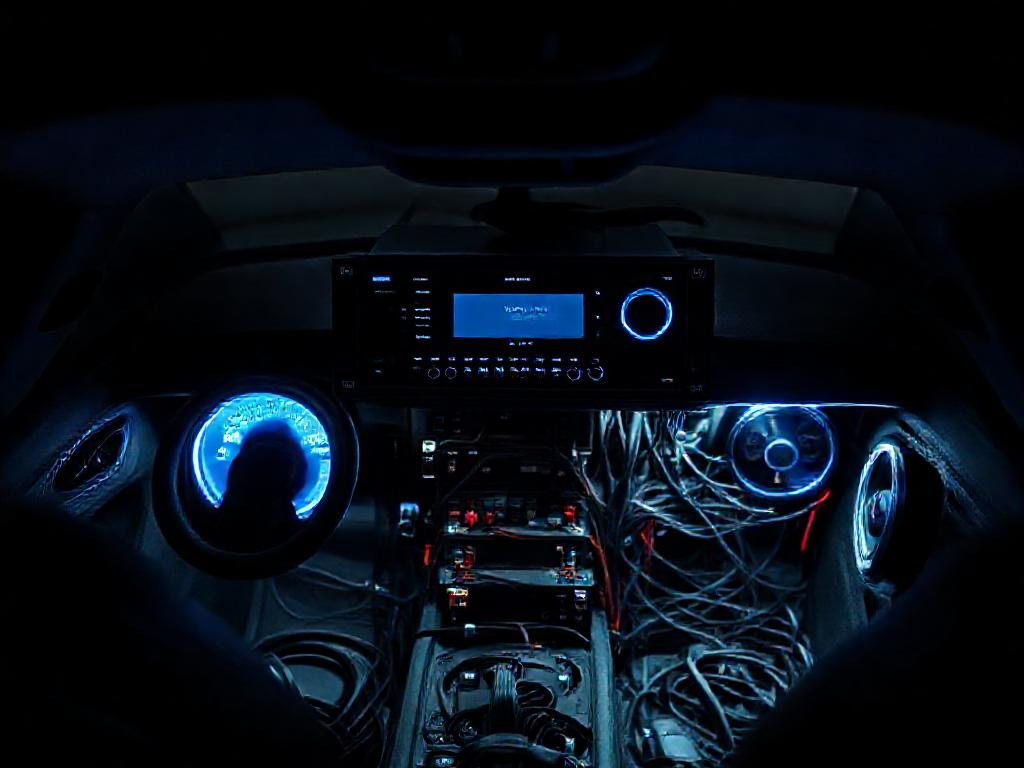
Choosing a Digital Signal Processor for your car audio system can feel overwhelming. The market offers dozens of options ranging from budget units with basic equalization to full-featured processors with integrated amplification. Making the wrong choice means either paying for features you do not need or discovering that your DSP cannot support your system goals down the road. This guide walks you through every critical factor so you can choose with confidence.
How Many Channels Does Your Car Audio System Actually Need?
Channel count is the first and most important specification to evaluate. The number of output channels on your DSP must match or exceed the number of individually amplified speaker drivers in your system. Here is how to calculate your needs:
- Basic System (6-8 channels): A two-way front stage (tweeter and midbass on each side) plus rear fill speakers and a subwoofer. This is the most common configuration and is well served by an 8-channel DSP.
- Intermediate System (10 channels): A three-way front stage (tweeter, midrange, and midbass per side), rear fill, and a subwoofer. A 10-channel processor like the Alchimist AD10H-700 handles this configuration with room for flexibility.
- Advanced System (12+ channels): A three-way front stage, dedicated center channel, rear speakers, and one or two subwoofer channels. The Alchimist AD12H-1500 with its 12 output channels and integrated amplification is purpose-built for these complex configurations.
A common mistake is buying a DSP with exactly the number of channels you need today. Always leave headroom for future upgrades. If your current system needs eight channels, a 10-channel unit gives you room to grow without replacing your processor.
What Input Options Should Your DSP Support?
The input section of a DSP determines what sources it can accept and how cleanly it receives the signal. There are several input types to consider:
High-Level (Speaker-Level) Inputs
These accept the amplified signal directly from your factory head unit or factory amplifier. This is essential if you are keeping your stock head unit, which is increasingly common in modern vehicles where the head unit controls climate, navigation, and vehicle settings. A quality DSP with high-level inputs should be able to de-clip and de-equalize the factory signal, restoring it to a flat, full-range source.
Low-Level (RCA/Pre-Out) Inputs
If you are using an aftermarket head unit with RCA pre-outs, low-level inputs provide the cleanest possible signal path. Look for DSPs that accept at least four channels of RCA input, with six or eight being ideal for source units with dedicated subwoofer outputs.
Digital Inputs
Optical (Toslink) and coaxial digital inputs bypass analog conversion entirely, keeping the signal in the digital domain from source to processor. This eliminates an entire stage of potential noise and distortion. The Alchimist AD10K-800 includes optical input along with Bluetooth connectivity, providing maximum source flexibility.
Bluetooth and Wireless
Built-in Bluetooth allows direct streaming from your phone without routing through the head unit. This is particularly valuable when the factory head unit compresses or processes the audio signal in undesirable ways. Some units in the Alchimist lineup even support wireless microphone input for karaoke and announcement applications.
Does the DSP Need Built-In Amplification?
DSP units fall into two categories: standalone processors that output only pre-amp level signals, and DSP-amplifier combos that include built-in power amplification.
Standalone DSPs are ideal when you already have external amplifiers you want to keep, or when you need maximum flexibility in amplifier selection. They output clean, processed signals via RCA to your amplifiers.
DSP-Amplifier Combos simplify installation by combining processing and amplification in a single chassis. This reduces wiring complexity, saves mounting space, and often costs less than buying separate components. The Alchimist AD12H-1500, for instance, integrates Class AB amplification directly into the processor, delivering both processing precision and clean power from one compact unit.
For most builds, a DSP with integrated amplification is the practical choice. It reduces potential ground loop issues, minimizes signal path length, and streamlines the installation. Reserve standalone DSPs for competition builds where amplifier selection is critical to the scoring criteria.
How Important Is the Tuning Software?
The tuning software is your interface to the DSP. You will spend hours working in it during the initial setup and return to it for adjustments over the life of the system. Poor software can make a powerful DSP frustrating to use, while great software makes even complex tuning intuitive.
Evaluate the software based on these criteria:
- Platform Compatibility: Does it run on Windows, Mac, Android, or iOS? Can you tune from a laptop in the shop and make quick adjustments from your phone in the field? Alchimist provides dedicated tuning applications for both PC and Android devices.
- Real-Time Adjustment: Can you hear changes as you make them, or do you need to write settings to the DSP each time? Real-time tuning dramatically speeds up the process.
- Preset Storage: Multiple preset slots allow you to store different tuning profiles for different listening preferences, source types, or passenger configurations.
- Visual Feedback: Graphical representations of your EQ curves, crossover slopes, and time alignment values help you understand the full picture of your tuning at a glance.
- Measurement Integration: Some software integrates with measurement microphones, allowing you to see the actual acoustic response of your system overlaid with your tuning adjustments.
What Processing Specifications Matter Most?
Beyond channel count and inputs, the internal processing specifications determine the audio quality ceiling of your DSP:
- Bit Depth: Look for 24-bit or higher processing. This provides a theoretical dynamic range of 144 dB, far exceeding what any car audio system can reproduce, ensuring that the processor never becomes the bottleneck.
- Sample Rate: A minimum of 48 kHz is standard. Higher sample rates (96 kHz) provide better high-frequency resolution and reduced aliasing artifacts, though the benefit is subtle in a car environment.
- EQ Bands Per Channel: More bands provide finer control. Thirty-one bands of parametric EQ per channel is considered professional-grade and allows precise room correction.
- Crossover Slope Options: Steeper slopes (24 dB/octave and above) provide cleaner separation between drivers. Look for at least Linkwitz-Riley alignment options at slopes up to 48 dB/octave.
- Time Alignment Resolution: Finer delay increments allow more precise alignment. Resolution of 0.01 ms or better is ideal for critical tuning.
How Do You Evaluate Build Quality and Reliability?
A DSP lives in a harsh environment. Temperature extremes, vibration, and electrical noise are constant threats. Evaluate build quality by examining:
- Chassis Material: Extruded aluminum or die-cast alloy housings dissipate heat effectively and resist vibration damage. The Alchimist AD12H-1500 features a powder-coated alloy construction designed specifically for the automotive environment.
- Connector Quality: Secure, locking connectors prevent intermittent connections caused by vibration. Loose RCA jacks or flimsy terminal blocks are a reliability concern.
- Thermal Management: Adequate heatsinking is essential, especially for DSP-amplifier combos. Overheating leads to thermal shutdown or, worse, premature component failure.
- Power Supply Filtering: A quality internal power supply rejects alternator whine and other electrical noise from the vehicle's charging system.
What Is the Right Budget for a Car DSP?
DSP pricing spans a wide range. Budget units under $150 typically offer basic equalization and limited channel counts. Mid-range processors between $200 and $500 provide comprehensive features suitable for most enthusiast builds. Premium units above $500, particularly those with integrated amplification, deliver professional-grade processing with robust build quality.
The right budget depends on the rest of your system. As a general guideline, allocate roughly 20 to 30 percent of your total system budget to signal processing. A $2000 system should have a $400 to $600 DSP at its heart. Skimping on the processor while spending heavily on speakers and amplifiers is like buying a sports car and filling it with low-grade fuel.
Which Alchimist DSP Is Right for Your Build?
Alchimist offers a range of processors to match different system complexities and budgets. For a standard two-way active front stage with subwoofer, the AD10H-700 provides 10 channels of precision processing with 31-band parametric EQ. For more complex builds requiring additional channels and integrated power, the AD12H-1500 delivers 12 channels of processing with built-in Class AB amplification and the advanced 12H700 chipset. The AD10K-800 adds entertainment features including Bluetooth streaming and wireless karaoke capability, making it ideal for systems that serve both audiophile listening and group entertainment.
Visit the Alchimist product catalog to compare specifications, download tuning software, and find the processor that matches your system design.