


 Deutsch
 Tiếng Việt
 日本語
日本語 한국어
한국어 ไทย
ไทย Português
 العربية
 Français
 Español
 Italiano
 Nederlands
 Svenska
 Norsk
Norsk Dansk
Dansk Polski
 Русский
 Türkçe
 Bahasa Indonesia
 Bahasa Melayu
10-Channel vs 12-Channel DSP: Which is Right for You
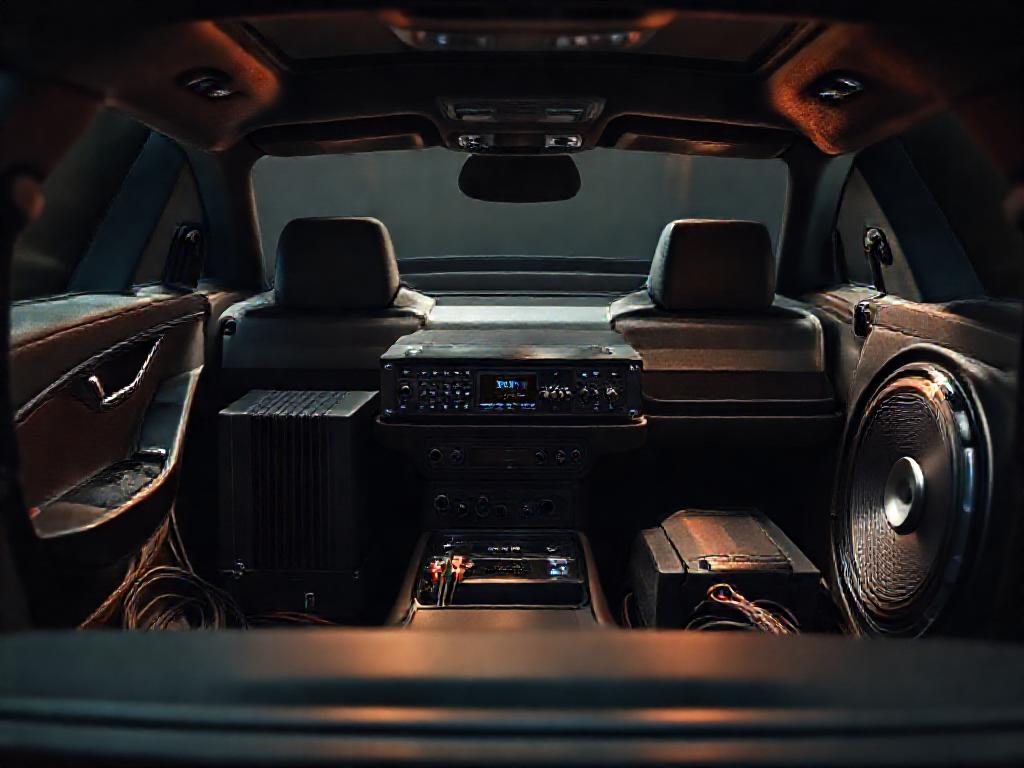
When planning a car audio system around a DSP, one of the first decisions you face is how many output channels you need. The two most common options for serious builds are 10-channel and 12-channel processors. The difference is not simply about having more outputs. It fundamentally affects what system configurations are possible, how much flexibility you have for future upgrades, and whether your DSP will be the last processor you ever need to buy. This article breaks down the practical differences so you can make the right choice for your specific build.
What Can You Build with a 10-Channel DSP?
A 10-channel DSP is the standard choice for most enthusiast-level car audio systems. It provides enough outputs to run a fully active front stage with rear fill and subwoofer integration. Here are the most common configurations:
Configuration 1: Three-Way Active Front + Sub
- Channels 1-2: Left and Right Tweeters (high-passed at 3-5 kHz)
- Channels 3-4: Left and Right Midrange (band-passed 300 Hz to 3-5 kHz)
- Channels 5-6: Left and Right Midbass (high-passed at 60-80 Hz)
- Channels 7-8: Rear Fill Left and Right
- Channels 9-10: Subwoofer Left and Right (or bridged mono)
This is the sweet spot for most builds. You get full active control over a three-way front stage, which is where the majority of your sound quality comes from, plus dedicated rear and subwoofer channels. The Alchimist AD10H-700 is designed precisely for this use case, offering 31-band parametric EQ on each channel and precise time alignment for all ten outputs.
Configuration 2: Two-Way Active Front + Center + Rear + Sub
- Channels 1-2: Left and Right Tweeters
- Channels 3-4: Left and Right Midbass
- Channels 5-6: Center Channel (tweeter and midbass, or a coaxial)
- Channels 7-8: Rear Left and Right
- Channels 9-10: Subwoofer
This configuration sacrifices the dedicated midrange driver in favor of a center channel, which can improve the listening experience for the front passenger by providing a real (rather than phantom) center image.
Configuration 3: Two-Way Active Front + Rear + Dual Sub
- Channels 1-2: Left and Right Tweeters
- Channels 3-4: Left and Right Midbass
- Channels 5-6: Rear Left and Right Tweeters
- Channels 7-8: Rear Left and Right Midbass
- Channels 9-10: Dual Subwoofers (independently controlled)
For builds where rear passenger sound quality matters as much as the front, this configuration provides a fully active two-way system for both rows.
What Additional Possibilities Does a 12-Channel DSP Unlock?
A 12-channel DSP removes the compromises inherent in a 10-channel unit. Those two extra channels may not sound like much on paper, but they open up configurations that are simply impossible with fewer outputs:
Configuration 1: Three-Way Active Front + Center + Rear + Sub
- Channels 1-2: Left and Right Tweeters
- Channels 3-4: Left and Right Midrange
- Channels 5-6: Left and Right Midbass
- Channels 7-8: Center Channel (two-way active)
- Channels 9-10: Rear Left and Right
- Channels 11-12: Subwoofer (stereo sub or dual subs)
This is the configuration that competition-level systems typically use. You get the full resolution of a three-way active front stage without sacrificing a center channel or rear fill. The Alchimist AD12H-1500 excels in this role, with its 12H700 processing chip providing the computational power to handle parametric EQ, time alignment, and crossover management across all twelve channels simultaneously.
Configuration 2: Three-Way Active Front + Active Rear + Sub
- Channels 1-6: Three-way active front (tweeter, mid, midbass per side)
- Channels 7-10: Two-way active rear (tweeter and midbass per side)
- Channels 11-12: Subwoofer
This is ideal for vehicles that regularly carry passengers who deserve more than afterthought rear fill. Both front and rear passengers get a properly tuned active system.
Configuration 3: Three-Way Active Front + Dual Sub Zones
- Channels 1-6: Three-way active front stage
- Channels 7-8: Rear fill
- Channels 9-10: Front subwoofer (under-seat or kick panel)
- Channels 11-12: Rear subwoofer (trunk)
Dual subwoofer zones allow independent control over bass in different locations. A front sub provides tactile impact for the driver, while a rear sub handles the deep low-frequency extension. With separate DSP channels, you can time-align and equalize each sub independently for seamless integration.
How Do 10-Channel and 12-Channel DSPs Compare on Processing Power?
More channels generally means a more powerful processor is required. Budget 12-channel units sometimes achieve the higher channel count by using a less capable chipset or by reducing the processing features available per channel. This is a critical distinction: a 12-channel DSP with 15-band EQ per channel may actually be less capable than a 10-channel unit with 31-band EQ per channel.
The Alchimist approach avoids this compromise. The AD12H-1500 uses the dedicated 12H700 signal processing chip, which provides full-resolution processing on all twelve channels without reducing the parametric EQ bands, crossover options, or time alignment precision. This is what separates a genuine 12-channel processor from a 10-channel processor with two channels bolted on as an afterthought.
What About Installation Complexity and Cost?
A 12-channel system requires more amplifier channels (unless using a DSP with integrated amplification), more speaker wire runs, and more installation time. Here is a practical comparison:
- Wiring: A 10-channel system needs 10 speaker wire runs from amplifier to speakers, plus 10 RCA interconnects from DSP to amplifier (if using a standalone DSP). A 12-channel system adds four more runs. In a vehicle where running wire is difficult, this adds meaningful labor time.
- Amplification: You need amplifier channels to match your DSP outputs. A 12-channel system that uses a DSP with integrated amplification, like the AD12H-1500, eliminates this concern entirely since the amplifier is built in.
- Cost: Expect a 12-channel DSP to cost 30 to 50 percent more than a comparable 10-channel unit. However, when you factor in the cost of potentially replacing a 10-channel DSP later when your system outgrows it, the 12-channel unit is often the more economical long-term choice.
- Tuning Time: More channels means more parameters to adjust. A 12-channel system takes roughly 20 to 30 percent longer to tune properly than a 10-channel system. This is a one-time investment of time that pays dividends in sound quality.
Which Channel Count Is Right for Your Specific Situation?
Here is a decision framework to simplify the choice:
Choose a 10-channel DSP if:
- Your system design uses a two-way or three-way active front stage with basic rear fill and subwoofer.
- You do not plan to add a dedicated center channel.
- Budget is a primary constraint and you want to maximize processing quality per channel.
- You are building your first serious system and want to master tuning fundamentals before adding complexity.
- Your vehicle has limited space for amplification and wiring.
Choose a 12-channel DSP if:
- Your system design includes a three-way front stage plus center channel, active rear, or multiple subwoofer zones.
- You want the flexibility to reconfigure your system in the future without replacing the processor.
- You are building for competition where scoring criteria reward center channel imaging and rear fill quality.
- You regularly carry passengers and want high-quality audio for all seating positions.
- You prefer a DSP with integrated amplification to simplify the build, since 12-channel DSP-amp combos like the AD12H-1500 provide both processing and power in one chassis.
Can You Start with 10 Channels and Upgrade Later?
Technically, yes. You can replace a 10-channel DSP with a 12-channel unit later. However, this means re-running interconnects, reconfiguring your amplifier wiring, and completely re-tuning the system from scratch. The tuning alone represents hours of work. If there is any chance your system will grow to need 12 channels, it is far more practical and cost-effective to start with the higher channel count.
The Alchimist product line makes this decision straightforward. The AD10H-700 delivers exceptional performance for systems that fit within ten channels. When your requirements demand more, the AD12H-1500 provides those additional channels with integrated amplification, so you gain outputs and power without adding a separate amplifier to the build. Both units share the same tuning software ecosystem, so your learning investment carries over directly.
Ultimately, the right channel count is the one that serves your system design with a small margin for growth. Measure your needs, plan one step ahead, and choose the processor that will be your system's foundation for years to come.